Mental health anxiety coloring pages may help some people feel calmer by encouraging focused attention, mindfulness, and relaxation. They are not a treatment for anxiety disorders, but they can be a helpful self-care activity alongside healthy coping strategies and professional mental health care when needed.
Anxiety can make it difficult to slow racing thoughts, concentrate on everyday tasks, or feel physically at ease. During periods of stress, many people look for simple activities that provide a sense of calm without requiring special skills or equipment. One option that has gained attention is mental health anxiety coloring pages, which combine creativity with mindful focus in a way that may temporarily ease feelings of tension.
Coloring is not a new therapeutic concept. Mental health professionals have long recognized that creative activities can support emotional well-being by helping people shift their attention away from distressing thoughts and toward the present moment. While recreational coloring is different from formal art therapy led by a licensed mental health professional, it can still be a meaningful addition to a healthy self-care routine.
Research suggests that engaging in structured, repetitive activities like coloring may promote relaxation for some individuals. Filling in patterns, choosing colors, and following shapes can encourage sustained attention, making it easier to take a break from constant worry. For some people, this experience resembles a mindfulness exercise, where attention gently returns to the task instead of anxious thoughts.
It is equally important to recognize what coloring cannot do. Anxiety disorders are medical conditions that may affect relationships, work, school, sleep, and physical health. Coloring pages alone cannot diagnose, prevent, or treat these conditions. If anxiety is persistent, causes significant distress, or interferes with daily life, evidence-based care from a qualified mental health professional remains the recommended approach. You can also learn more about anxiety disorders in our guide about is anxiety a mental health disorder .
Some people also experience anxiety alongside other mental health conditions. When intrusive thoughts or repetitive behaviors are present, a screening resource such as oct test may help you understand whether discussing your symptoms with a healthcare provider would be appropriate. Screening tools are not diagnostic, but they can support informed conversations with a clinician.
This article explains how mental health anxiety coloring pages may support relaxation, what current evidence says about their benefits, how to choose pages that match your needs, and when professional treatment is the safest and most effective next step.

How Can Mental Health Anxiety Coloring Pages Support Relaxation?
Mental health anxiety coloring pages may support relaxation by helping shift attention away from anxious thoughts and toward a simple, structured activity. For many people, coloring creates a quiet mental space that encourages focus, slows the pace of thinking, and promotes a sense of calm. While the effects vary from person to person, coloring can be a useful addition to a broader self-care routine.
When someone experiences anxiety, the brain often becomes preoccupied with worries about the future or repeated thoughts about stressful situations. Coloring introduces a task that is predictable and requires gentle concentration. Choosing colors, staying within lines, and completing patterns can redirect attention without demanding intense mental effort, making it easier to take a temporary break from cycles of worry.
This process shares some characteristics with mindfulness, a practice that involves paying attention to the present moment without judging thoughts or feelings. Instead of trying to stop anxious thoughts completely, coloring encourages the mind to repeatedly return to the activity in front of you. That shift in attention may reduce mental overload and make it easier to relax for a period of time.
Coloring may also support emotional regulation. Emotional regulation refers to the ability to recognize and respond to emotions in healthy ways rather than becoming overwhelmed by them. Spending even a short period engaged in a calming creative activity can provide an opportunity to pause, notice physical tension, and respond with greater intention instead of reacting automatically to stress.
The environment matters as much as the activity itself. A quiet space, comfortable seating, and a few uninterrupted minutes can make coloring feel more restorative. Some people also find it helpful to pair coloring with slow breathing, gentle instrumental music, or a warm cup of tea. These habits do not treat anxiety disorders, but together they may create conditions that support relaxation.
Coloring is most helpful when viewed as one tool among many rather than a complete solution. Healthy sleep habits, regular physical activity, social support, stress-management techniques, and evidence-based mental health care all play important roles in managing anxiety. Used in that context, mental health anxiety coloring pages can become a practical way to build small moments of calm into everyday life.
Why Coloring Encourages Mindful Attention
Mindful attention develops when your focus stays with the present activity instead of repeatedly returning to worries or distractions. Coloring naturally supports this process because it combines visual attention, gentle hand movements, and creative decision-making in a single task.
Unlike activities that involve constant notifications or multitasking, coloring has no pressure to perform quickly. You can work at your own pace, pause whenever needed, and return without losing progress. This flexibility may make it especially appealing during periods of heightened stress.
The goal is not to produce a perfect picture. Instead, the value comes from the experience of slowing down, noticing colors and shapes, and allowing the mind to rest from persistent worry for a short time. Even brief periods of focused attention can help reinforce healthy coping habits when practiced consistently.
What Does Research Say About Mental Health Anxiety Coloring Pages?
Research suggests that coloring may temporarily reduce stress and promote relaxation for some people, particularly when it encourages focused attention and mindful engagement. The evidence is promising but limited. Mental health anxiety coloring pages should be viewed as a supportive self-care activity rather than a treatment for an anxiety disorder.
Several studies have explored how structured coloring affects mood, stress, and anxiety. Some findings indicate that coloring geometric patterns or other organized designs may help reduce feelings of anxiety in the short term by directing attention toward a repetitive, calming task. Researchers believe this focused activity may reduce mental distractions and encourage a state similar to mindfulness, although it is not identical to formal mindfulness training.
Health organizations such as the National Institute of Mental Health (NIMH) and the Substance Abuse and Mental Health Services Administration (SAMHSA) recommend evidence-based approaches—including psychotherapy, healthy lifestyle habits, and, when appropriate, medication—for managing anxiety disorders. Coloring is not included as a primary treatment because current research has not shown that it can reduce the underlying symptoms of a diagnosed anxiety disorder on its own.
That does not mean coloring lacks value. Many clinicians encourage patients to develop a variety of healthy coping strategies that support emotional well-being between therapy sessions or during everyday stress. Creative activities like coloring may help people slow down, establish a calming routine, and create intentional breaks during busy or emotionally demanding days.
Researchers also recognize that responses vary. One person may find coloring deeply relaxing, while another may prefer walking, listening to music, journaling, or practicing breathing exercises. Personal preference, the severity of anxiety, and the surrounding environment can all influence how helpful a particular coping strategy feels. Rather than searching for a single “best” technique, many mental health professionals encourage building a personalized toolbox of coping skills that can be used in different situations.
| Coping Activity | Primary Purpose | Best For | Evidence Base |
|---|---|---|---|
| Coloring | Focused relaxation and mindful attention | Short periods of stress, quiet breaks, creative self-care | Some evidence for short-term stress reduction; not a standalone treatment |
| Deep Breathing | Calm the body’s stress response | Acute stress, physical tension, moments of worry | Strong evidence as part of anxiety management strategies |
| Journaling | Process thoughts and emotions | Identifying triggers and reflecting on feelings | Supported as a helpful self-reflection tool for many people |
| Mindfulness Meditation | Improve present-moment awareness | Ongoing stress management and emotional regulation | Strong evidence when practiced consistently, often as part of structured programs |
The most effective anxiety management plan often combines several evidence-based strategies. Mental health anxiety coloring pages can fit naturally into that plan by offering a simple, accessible way to pause and recharge, but they should not replace professional evaluation or treatment when anxiety becomes persistent, severe, or begins to interfere with daily life.
Choosing the Right Mental Health Anxiety Coloring Pages
The best mental health anxiety coloring pages are the ones that feel calming rather than overwhelming. There is no single design that works for everyone. Your personal preferences, current stress level, vision, and attention span all influence whether coloring feels relaxing or frustrating.
Some people enjoy intricate illustrations with detailed patterns because they encourage prolonged focus and provide a sense of accomplishment. Others may find those same designs mentally demanding, especially during periods of heightened anxiety. If concentrating feels difficult or your thoughts are racing, a simpler page with larger shapes and open spaces may be a better starting point.
The subject of the artwork can also affect the experience. Nature scenes, flowers, leaves, animals, oceans, and gentle geometric patterns are popular choices because they often create a peaceful visual experience. Positive affirmations or encouraging words may appeal to some individuals, while others prefer images without text so they can focus entirely on colors and shapes. There is no evidence that one theme is clinically superior, so selecting designs you genuinely enjoy is more important than following a trend.
Coloring tools are another consideration. Colored pencils provide greater control for detailed work, while markers create bold colors with less effort. Crayons and gel pens may be comfortable options depending on personal preference or hand strength. The goal is to choose materials that make the activity enjoyable rather than turning it into a task that requires perfection.
It can also help to think about where and when you plan to color. Printable pages are convenient for home use, while a small coloring book and travel-sized pencils may be useful during breaks at work, while traveling, or before appointments. Keeping supplies easily accessible makes it more likely that coloring becomes a consistent part of your routine instead of an activity reserved for particularly stressful days.
Simple vs. Detailed Designs
Simple and detailed coloring pages each offer different benefits, and the better choice often depends on how you feel in the moment rather than your artistic ability.
Simple designs with larger spaces are generally easier to complete and require less concentration. They may be especially helpful when anxiety makes it difficult to focus or when you only have a few minutes to unwind. Completing a page quickly can also provide a satisfying sense of progress, which may encourage you to continue the habit.
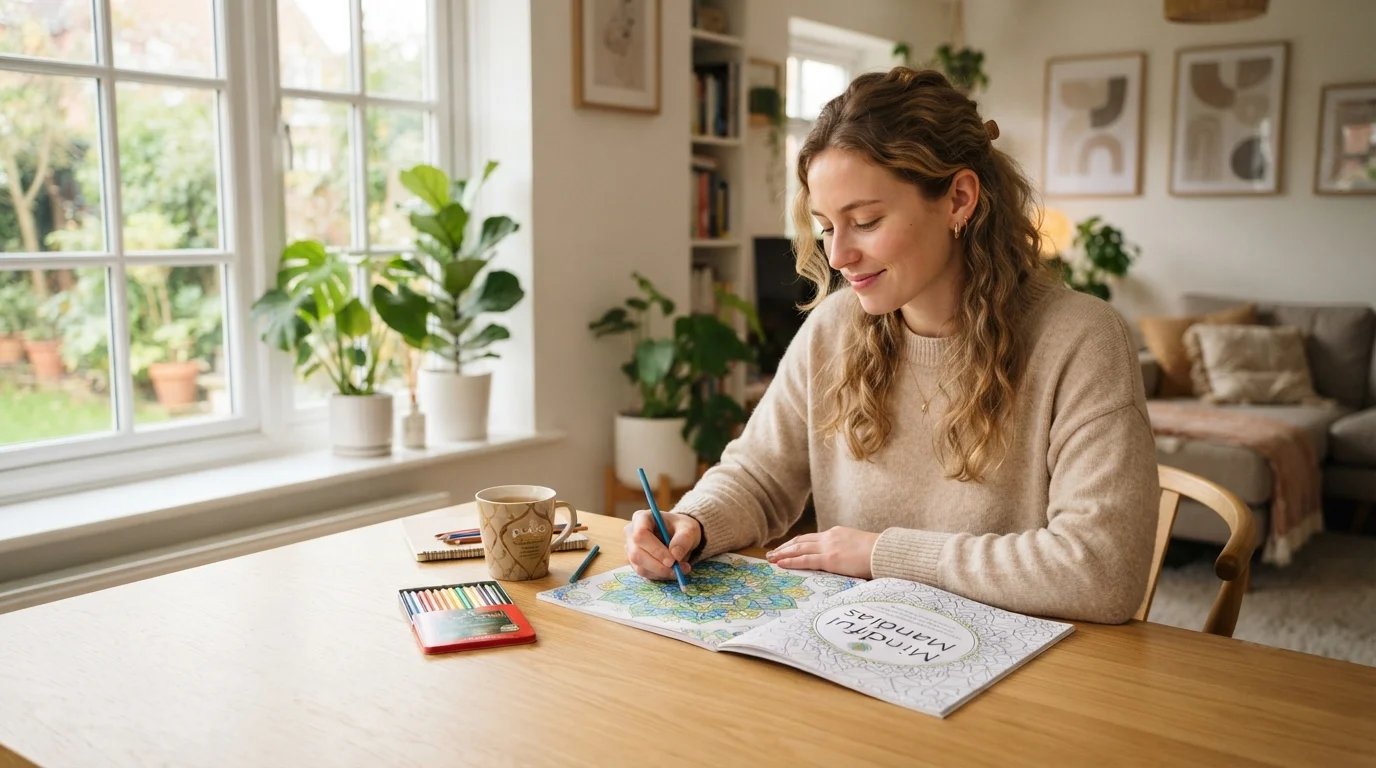
Detailed illustrations, such as mandalas or complex patterns, demand sustained attention and fine motor control. Some people find this level of concentration calming because it leaves less room for distracting thoughts. Others may become frustrated if they feel pressured to stay within small lines or finish an intricate design.
It is perfectly reasonable to keep a variety of coloring pages available and choose one based on your energy level and emotional state. On difficult days, a simple design may feel more supportive. When you have more time and mental focus, a detailed page can provide a longer period of quiet concentration. The most effective choice is the one that helps you feel engaged, comfortable, and relaxed—not the one that looks the most impressive.
How to Make Coloring Part of an Anxiety Self-Care Routine
Mental health anxiety coloring pages are most effective when they become part of a consistent self-care routine instead of being used only during moments of intense stress. Regular practice can create a familiar calming habit that supports emotional well-being, even though it does not treat an anxiety disorder.
Many people find it helpful to set aside 10 to 20 minutes for coloring at a predictable time each day. This might be after work, before bedtime, or during a lunch break. A consistent schedule helps turn coloring into a healthy routine rather than an occasional response to overwhelming emotions.
The setting can make a difference. Choose a comfortable, well-lit space where interruptions are less likely. Silencing phone notifications or stepping away from other distractions allows you to focus fully on the activity. If your mind wanders, gently bring your attention back to the colors, shapes, and movements of your hand without criticizing yourself.
Pairing coloring with other evidence-based relaxation techniques may enhance the experience. For example, you can take slow, steady breaths while coloring or spend a few moments noticing how your body feels before and after the session. These simple habits encourage greater awareness of physical and emotional changes, making it easier to recognize what helps you feel calmer over time.
It is also helpful to let go of expectations about the finished page. Coloring is not a test of artistic ability or creativity. The purpose is to create a quiet moment for yourself, not to produce perfect artwork. Allowing mistakes, experimenting with colors, and enjoying the process can reduce unnecessary pressure and make the activity feel more restorative.
If you notice that coloring consistently improves your mood or helps you unwind, consider making it one part of a broader wellness plan. Regular physical activity, adequate sleep, balanced nutrition, meaningful social connections, and professional mental health care when needed all contribute to long-term emotional health. Used alongside these habits, mental health anxiety coloring pages can become a simple way to support daily stress management.
Summary : Five Ways to Get More Benefit from Coloring
- Set aside 10–20 minutes at a regular time each day.
- Color in a quiet, comfortable space with minimal distractions.
- Focus on the experience rather than creating a perfect picture.
- Combine coloring with slow, steady breathing or another relaxation technique.
- Treat coloring as one healthy coping strategy within a balanced self-care routine, not as a replacement for professional treatment.

Mental Health Anxiety Coloring Pages Are Helpful—but They Have Limits
Mental health anxiety coloring pages can support relaxation, but they are not a substitute for evidence-based mental health care. They may help you feel calmer in the moment, yet they do not address the underlying causes of an anxiety disorder or replace professional assessment and treatment when symptoms are persistent or severe.
Anxiety disorders involve more than occasional worry or stress. They can affect how a person thinks, feels, and functions in daily life. Someone may continue to experience excessive worry, panic symptoms, sleep problems, or difficulty concentrating even after using healthy coping strategies like coloring. In these situations, additional support is often needed.
Evidence-based treatments are designed to target the patterns that maintain anxiety over time. Cognitive Behavioral Therapy (CBT), for example, helps people identify unhelpful thinking patterns and develop healthier ways to respond to anxious thoughts and situations. Depending on an individual’s needs, a healthcare provider may also recommend medication, lifestyle changes, or a combination of approaches.
It is also important to recognize when a coping activity is no longer providing meaningful relief. If you find yourself relying on coloring to avoid situations that trigger anxiety, or if anxiety continues to interfere with work, school, relationships, or daily responsibilities, it may be time to speak with a mental health professional. Seeking help is not a sign that self-care has failed—it is a step toward receiving care that matches the severity of your symptoms.
Creative activities remain valuable because they can complement professional treatment. Many therapists encourage clients to continue healthy hobbies that promote relaxation, emotional expression, and stress management outside of therapy sessions. Coloring may be one of those activities, helping create moments of calm while evidence-based treatment addresses the broader challenges associated with anxiety.
Myth vs. Fact
| Myth | Fact |
|---|---|
| Coloring can cure anxiety. | Coloring may promote relaxation, but it does not treat or cure anxiety disorders. |
| If coloring helps, therapy is unnecessary. | Feeling better temporarily does not replace a professional evaluation when anxiety is persistent or affects daily life. |
| Only artistic people benefit from coloring. | The calming effects come from focused attention and the activity itself, not artistic skill. |
| More detailed coloring pages are always better. | The most effective design is the one that feels calming and manageable for your current stress level. |
| Coloring is only for children. | Adults and children alike may enjoy coloring as a healthy self-care activity, although individual preferences differ. |
Understanding these limits helps set realistic expectations. Mental health anxiety coloring pages can play a meaningful role in a balanced self-care routine, but lasting improvement from an anxiety disorder often requires personalized, evidence-based care tailored to an individual’s symptoms and circumstances.
When to Seek Professional Support for Anxiety
Occasional stress and worry are a normal part of life, but anxiety that is frequent, intense, or difficult to control deserves professional attention. If anxious thoughts or physical symptoms continue for weeks, interfere with your daily activities, or prevent you from enjoying work, school, relationships, or hobbies, it is a good idea to schedule an evaluation with a qualified mental health professional or primary care provider.
Professional assessment is especially important if you notice that anxiety is becoming more disruptive over time. Signs that warrant evaluation may include:
- Persistent or excessive worry that is difficult to control.
- Panic attacks or recurring episodes of intense fear.
- Ongoing sleep problems related to anxiety.
- Difficulty concentrating or completing everyday responsibilities.
- Avoiding places, situations, or activities because of fear or worry.
- Physical symptoms such as muscle tension, restlessness, or a racing heartbeat that continue without another medical explanation.
A mental health professional can perform a comprehensive evaluation to better understand your symptoms, rule out other possible causes, and recommend an individualized treatment plan. Depending on your needs, this may include psychotherapy, such as Cognitive Behavioral Therapy (CBT), medication, lifestyle changes, or a combination of evidence-based approaches. Organizations like the National Institute of Mental Health (NIMH) provide reliable educational information about anxiety disorders and available treatments.
If you already use coping strategies such as exercise, mindfulness, journaling, or mental health anxiety coloring pages, continue sharing what has been helpful with your provider. These activities can complement treatment, but they work best as part of a broader plan designed around your specific symptoms and goals.
When Anxiety Becomes an Emergency
Most anxiety does not require emergency care, but certain situations do. Seek immediate help by calling 911, going to the nearest Emergency Department, or contacting the 988 Suicide & Crisis Lifeline if you or someone else:
- Has thoughts of suicide or self-harm.
- Has made a suicide attempt or is in immediate danger.
- Is experiencing severe emotional distress and cannot stay safe.
- Is unable to care for themselves because of overwhelming psychiatric symptoms.
Reaching out for professional support is a positive step toward recovery. Anxiety is a treatable mental health condition, and many people experience meaningful improvement through evidence-based care, ongoing support, and healthy coping strategies. Coloring can remain a calming part of your daily routine, but you do not have to rely on self-care alone when anxiety begins to affect your quality of life.

Conclusion
Mental health anxiety coloring pages offer a simple, accessible way to support relaxation and create moments of mindful focus during stressful days. For many people, coloring can provide a welcome break from anxious thoughts by encouraging attention to the present moment and promoting a sense of calm. While research suggests these activities may help reduce stress in the short term, they are best viewed as one part of a broader self-care routine rather than a treatment for anxiety disorders.
If anxiety becomes persistent, interferes with daily life, or continues despite healthy coping strategies, professional evaluation is the most appropriate next step. Evidence-based treatments such as Cognitive Behavioral Therapy (CBT), other forms of psychotherapy, and medication when clinically indicated remain the foundation of care for anxiety disorders. Combining professional support with healthy habits—including creative activities like coloring—can help many people build long-term resilience and improve their overall well-being.
Frequently Asked Questions
1. Do mental health anxiety coloring pages really help with anxiety?
Mental health anxiety coloring pages may help some people feel calmer by encouraging focused attention and mindfulness. They are not a treatment for anxiety disorders, but they can be a helpful self-care activity that complements evidence-based care.
2. Are coloring pages considered art therapy?
No. Coloring pages are a recreational or self-care activity, while art therapy is a structured mental health treatment provided by a licensed art therapist. Although both involve creative expression, art therapy includes individualized therapeutic goals and professional guidance.
3. What type of coloring pages are best for anxiety?
The best coloring pages are those you find calming and enjoyable. Some people prefer simple designs with large spaces, while others enjoy detailed mandalas or nature-inspired patterns. The right choice depends on your comfort level, concentration, and personal preference.
4. Can children use anxiety coloring pages?
Yes. Children may enjoy coloring as a relaxing activity, particularly when paired with supportive conversations and healthy coping skills. However, persistent anxiety, behavioral changes, or emotional distress should be evaluated by a qualified healthcare professional rather than managed with coloring alone.
5. How often should I use coloring for stress relief?
There is no recommended medical frequency. Many people find that coloring for 10 to 20 minutes several times a week—or whenever they need a quiet break—fits naturally into their self-care routine. Consistency is often more helpful than the length of each session.
6. Can coloring replace therapy or medication for anxiety?
No. Coloring may temporarily reduce stress, but it cannot treat an anxiety disorder. If anxiety is persistent, severe, or interferes with work, school, relationships, or daily activities, evidence-based treatment from a qualified mental health professional is recommended.
7. When should I seek professional help instead of relying on coloring?
You should seek professional evaluation if anxiety lasts for several weeks, becomes difficult to control, causes panic attacks, disrupts sleep, leads to avoidance of everyday activities, or significantly affects your quality of life. Immediate emergency care is necessary if you experience thoughts of self-harm or suicide.
Medical Review Disclosure
Medically Reviewed By:
Dr. Gloria Fosu, DNP, PMHNP-BC
Last Medical Review: July 31, 2026
This article is intended for educational purposes only and should not be used as a substitute for professional medical advice, diagnosis, or treatment. Always seek the guidance of a qualified healthcare provider regarding questions about your mental health or any medical condition. Never disregard professional medical advice or delay seeking care because of information you have read in this article.
Call to Action
Concerned About Anxiety?
If anxiety is affecting your daily life, relationships, work, or overall well-being, professional support can help. A qualified mental health provider can evaluate your symptoms, discuss evidence-based treatment options, and create a care plan tailored to your needs.
Arthur Behavioral Health provides compassionate, evidence-based mental health care to help individuals better understand and manage anxiety. If you’re ready to take the next step, reach out to schedule a professional evaluation.
References
- American Psychiatric Association. Diagnostic and Statistical Manual of Mental Disorders (5th ed., text rev.; DSM-5-TR). American Psychiatric Association Publishing.
- National Institute of Mental Health. Anxiety Disorders.
- Substance Abuse and Mental Health Services Administration (SAMHSA). Behavioral Health Treatment Services and Resources.
- National Center for Complementary and Integrative Health. Mind and Body Practices.
- Flett, J. A. M., Lie, C., Riordan, B. C., Thompson, L. M., Conner, T. S., & Hayne, H. (2017). Sharpen Your Pencils: Preliminary Evidence That Adult Coloring Reduces Depressive Symptoms and Anxiety. Creativity Research Journal.
- Carsley, D., Heath, N. L., & Fajnerova, S. (2015). Effectiveness of Coloring Mandalas on Mood, Anxiety, and Mindfulness. Art Therapy: Journal of the American Art Therapy Association.