
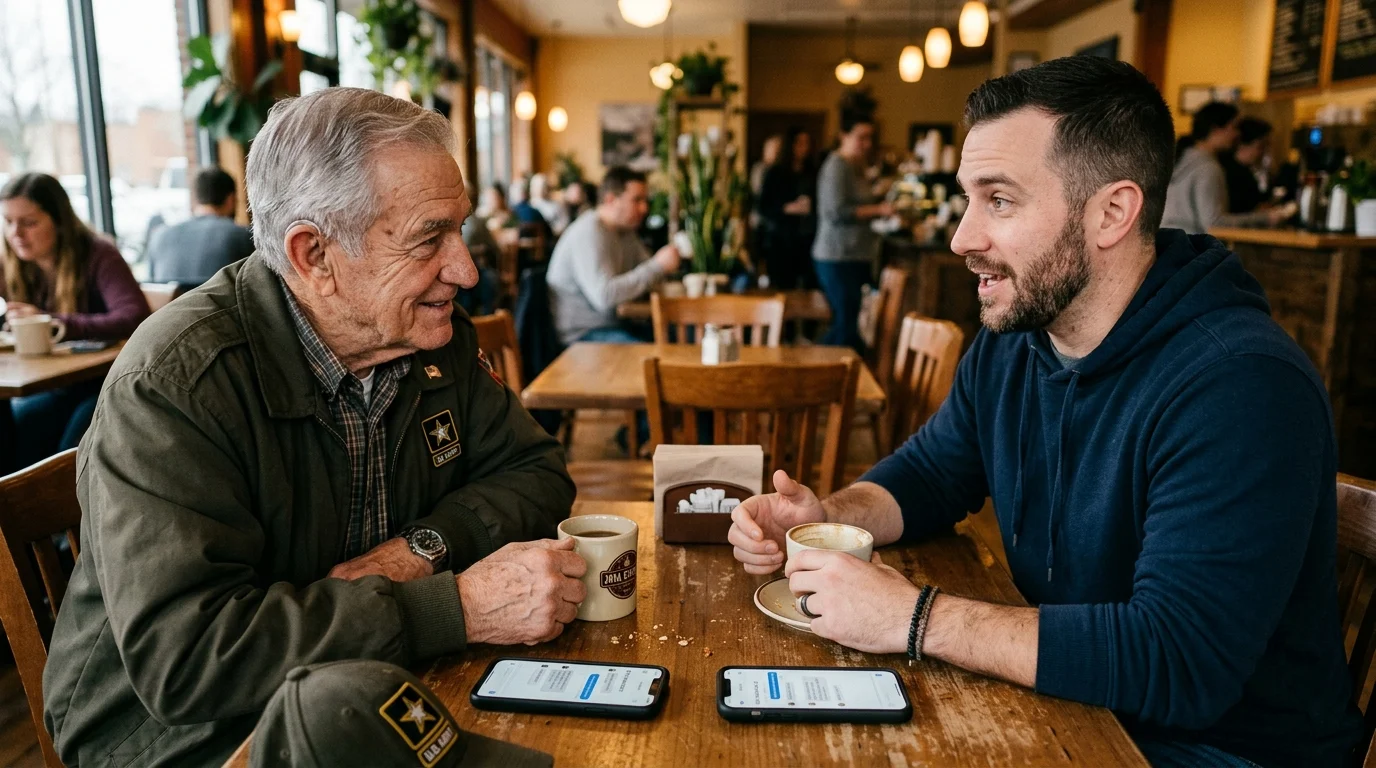
Leaving military service brings a shift few people outside it fully understand. The routines change. The support structure changes. For many veterans, the mental load of that transition — plus whatever was carried home from service — doesn’t come with a built-in support system anymore.
Mental health apps won’t replace that support system, but they can fill real gaps: something private to use at 2 a.m., a tool that doesn’t require an appointment, a way to practice skills between therapy sessions. This guide is part of a broader look at mental health apps worth considering, narrowed here to the apps built or best suited for veterans specifically.
Why the Best Mental Health Apps for Veterans Look Different
Veterans face a mental health landscape that’s measurably different from the general population’s. Mental health conditions rank among the most frequently diagnosed conditions at the VA, and roughly one in four active service members reports a mental health condition.
Access is a real barrier, too. Not every veteran is enrolled in VA care, and even those who are may face long waits for an appointment. That gap is exactly where apps can help — not as a replacement for care, but as something to lean on between sessions or before someone is ready to walk into a clinic at all.
The apps that work best for this audience tend to share a few traits: they’re built around PTSD and trauma symptoms specifically, they connect users with people who’ve actually served, and they don’t require handing sensitive health information to a civilian employer’s insurance system.

How We Evaluated These Apps
Every app below was checked against five criteria: cost (free vs. subscription), whether it’s built or endorsed by the VA or another credible clinical body, evidence base, privacy practices, and platform availability (iOS/Android).
A quick note before the list: these apps are tools, not treatment. If you’re in crisis or having thoughts of suicide, apps aren’t the right first step — the Veterans Crisis Line is. You can reach it by dialing 988 and pressing 1, texting 838255, or chatting online, all free and available 24/7, regardless of whether you’re enrolled in VA health care.
The Apps
Here’s the lineup — a mix of VA-built clinical tools and vetted apps from outside the VA system, chosen to cover the range of what veterans actually search for.
PTSD Coach
PTSD Coach was built specifically for people who have, or think they might have, PTSD. It includes psychoeducation on trauma symptoms, a self-assessment tool, and coping skills like grounding exercises and positive self-talk that can be customized with your own photos, music, and contacts.
It’s completely free on iOS and Android, and it works whether or not you’re currently in treatment. The standout feature is how directly it was built for this exact audience — it was developed jointly by the VA’s National Center for PTSD and the Department of Defense.
Best for: Veterans managing PTSD symptoms day-to-day, with or without a therapist.
Limitation: It’s a self-management tool, not a diagnostic one — a formal PTSD diagnosis still requires an evaluation from a licensed provider.
Objective Zero
Objective Zero connects veterans, active service members, and their families directly to peer supporters — called Pathfinders — via voice, video, or text, many of whom have faced similar struggles themselves. It’s free to download and use, and conversations can be anonymous.
Users can filter Pathfinders by branch of service, deployment history, or demographics to find someone with a genuinely similar background. The app also links out to meditation content, yoga, and curated wellness resources, and it’s built with an eye toward suicide prevention specifically, though it’s explicit that it isn’t a crisis line itself.
Best for: Veterans who want to talk to someone who’s actually served, without going through a clinical intake process first.
Limitation: It’s not a substitute for a crisis line — if you’re in immediate danger, the app itself directs you to call 911 or the Veterans Crisis Line instead.

AIMS (Anger and Irritability Management Skills)
Anger and irritability are common but under-discussed struggles after service, and AIMS is a free VA app built to address them directly. It walks users through educational content, self-assessments, and structured exercises for recognizing anger triggers and de-escalating before they boil over.
It’s a narrower tool than something like PTSD Coach, but that focus is the point — it treats anger as a legitimate, standalone mental health target rather than folding it into a generic stress-management app.
Best for: Veterans whose biggest day-to-day friction point is irritability or anger, at home or at work.
Limitation: Persistent or severe anger that’s damaging relationships or work usually needs professional support alongside the app, not instead of it.
Insomnia Coach
Hypervigilance and disrupted sleep are common after deployment, and Insomnia Coach was built by the VA specifically for people managing sleep problems on their own, without a therapist walking them through it in real time. It’s grounded in Cognitive Behavioral Therapy for Insomnia (CBT-I), the same evidence-based approach used in clinical treatment.
The app tracks sleep patterns, offers a structured multi-week program, and adjusts recommendations based on the data you log. It’s free on both major platforms.
Best for: Veterans dealing with insomnia or disrupted sleep who aren’t currently working with a sleep specialist.
Limitation: It’s designed for self-guided use — veterans in active CBT-I treatment with a provider should use the related CBT-i Coach app instead, which is built to pair with therapy.
Headspace
Headspace is a mainstream meditation and mindfulness app, but it’s included here because of a specific partnership: through a collaboration with Blue Star Families, veterans and their families get free access to the full flagship app, not just a stripped-down trial.
The content covers guided meditations, sleep-focused soundscapes, and stress-reduction exercises, and it’s less clinical in tone than the VA-built apps — useful for veterans who want something lower-key than a symptom tracker.
Best for: Veterans who want a mindfulness practice without a heavy clinical framing.
Limitation: It’s general wellness content, not built around trauma or PTSD specifically, so it works best alongside a more targeted tool, not in place of one.
VetChange
Alcohol use is a common coping mechanism among veterans dealing with stress or trauma, and VetChange is a free VA-affiliated app built specifically to help veterans reduce or quit drinking. It uses self-monitoring, personalized goal-setting, and coping-strategy content rather than a one-size-fits-all program.
It’s discreet by design — there’s no requirement to disclose drinking habits to an employer or even to a VA provider to use it, which matters for veterans who aren’t ready to bring the topic to a clinical appointment yet.
Best for: Veterans who want to address drinking habits privately, before or alongside formal treatment.
Limitation: It’s built for reducing or moderating use, not for managing withdrawal or severe alcohol use disorder, which needs medical supervision.
BetterHelp
BetterHelp is a teletherapy platform connecting users with a licensed therapist for video, phone, or messaging sessions, and it’s the one paid option on this list — running roughly $260–$400 per month depending on plan and location. It’s a different category from the self-guided apps above: an actual clinician, not just structured content.
BetterHelp’s financial aid application factors in circumstances including veteran status, so it’s worth checking before assuming the full price applies. It also accepts HSA/FSA funds.
Best for: Veterans who want licensed therapy but face access barriers to in-person or VA-based care, such as long waitlists or rural location.
Limitation: It’s a general teletherapy platform, not veteran-specific — you may need to specifically request a therapist with military or trauma experience rather than assuming one will be assigned.
Comparison Table
| App | Best For | Price | Platform |
|---|---|---|---|
| PTSD Coach | PTSD symptom management | Free | iOS, Android |
| Objective Zero | Peer support from fellow veterans | Free | iOS, Android |
| AIMS | Anger and irritability | Free | iOS, Android |
| Insomnia Coach | Sleep disruption, hypervigilance | Free | iOS, Android |
| Headspace | Mindfulness and meditation | Free for veterans (Blue Star Families) | iOS, Android, Web |
| VetChange | Reducing alcohol use | Free | iOS, Android |
| BetterHelp | Licensed teletherapy | ~$260–$400/month, financial aid available | iOS, Android, Web |
Choosing an App as a Veteran
The apps that tend to work best for veterans share a few things the general “top mental health apps” lists usually miss: they’re built around the specific texture of military experience, not just symptoms in the abstract.
Privacy matters more here than in a lot of other audience categories. Many veterans are wary of any tool that could feed information back to a civilian employer or insurance system, which is part of why VA-built apps that require no account or login — like PTSD Coach — tend to see higher trust and adoption than commercial competitors.
Peer connection is another differentiator. Research on veteran suicide prevention consistently points to the value of talking with someone who’s been through something similar, which is why apps like Objective Zero lean so heavily on trained peer supporters rather than clinicians alone.
The same discretion concerns show up for veterans navigating a return to civilian employment — an issue we cover in more depth in our guide to mental health apps for professionals, particularly around using apps without it being visible to an employer.

When an App Isn’t Enough
None of these apps are a substitute for a diagnosis or for treatment of moderate-to-severe PTSD, depression, or substance use. They’re built to supplement care, not replace it — most of the VA’s own apps say this explicitly in their app store descriptions.
If symptoms are affecting your ability to function day to day — sleep, work, relationships — that’s a signal to bring it to a VA provider or community-based clinician, not just an app. VA mental health care is available regardless of whether you’re currently enrolled in other VA benefits.
And if you’re in crisis, none of these apps should be your first call. The Veterans Crisis Line is free, confidential, and available whether or not you’re enrolled in VA health care: dial 988 and press 1, text 838255, or chat online at VeteransCrisisLine.net.
FAQ
Are VA mental health apps actually free?
Yes. Every app built by the VA’s National Center for PTSD or the broader VA App Store — including PTSD Coach, Insomnia Coach, AIMS, and VetChange — is free to download and use, with no subscription or in-app purchases.
Do I need to be enrolled in VA health care to use these apps?
No. VA-built apps like PTSD Coach and Objective Zero are open to any veteran, service member, or even family member — you don’t need to be enrolled in VA health care or have a current VA provider to download and use them.
Can an app replace therapy for PTSD?
No. Apps like PTSD Coach are designed to supplement professional treatment, not replace it. They can help manage symptoms day-to-day, but PTSD treatment typically requires an evidence-based therapy delivered by a licensed provider.
Are these apps private and safe from my employer or the VA seeing my data?
Non-VA apps like Objective Zero and Headspace don’t share data with the VA or an employer. VA-built apps’ data-sharing practices vary by app — check each app’s specific privacy policy, since guarantees of anonymity or confidentiality differ by service.
What should I do if I’m in crisis right now?
Contact the Veterans Crisis Line immediately: dial 988 and press 1, text 838255, or chat online at VeteransCrisisLine.net. It’s free, confidential, and available 24/7, whether or not you’re enrolled in VA health care or benefits.
Closing
The right app depends on what’s actually going on — PTSD symptoms call for a different tool than sleep disruption or anger. Start with one that matches your most pressing need rather than trying all seven at once.
And if you or a veteran you know is in crisis, the Veterans Crisis Line is available right now: dial 988 and press 1, text 838255, or chat at VeteransCrisisLine.net.