
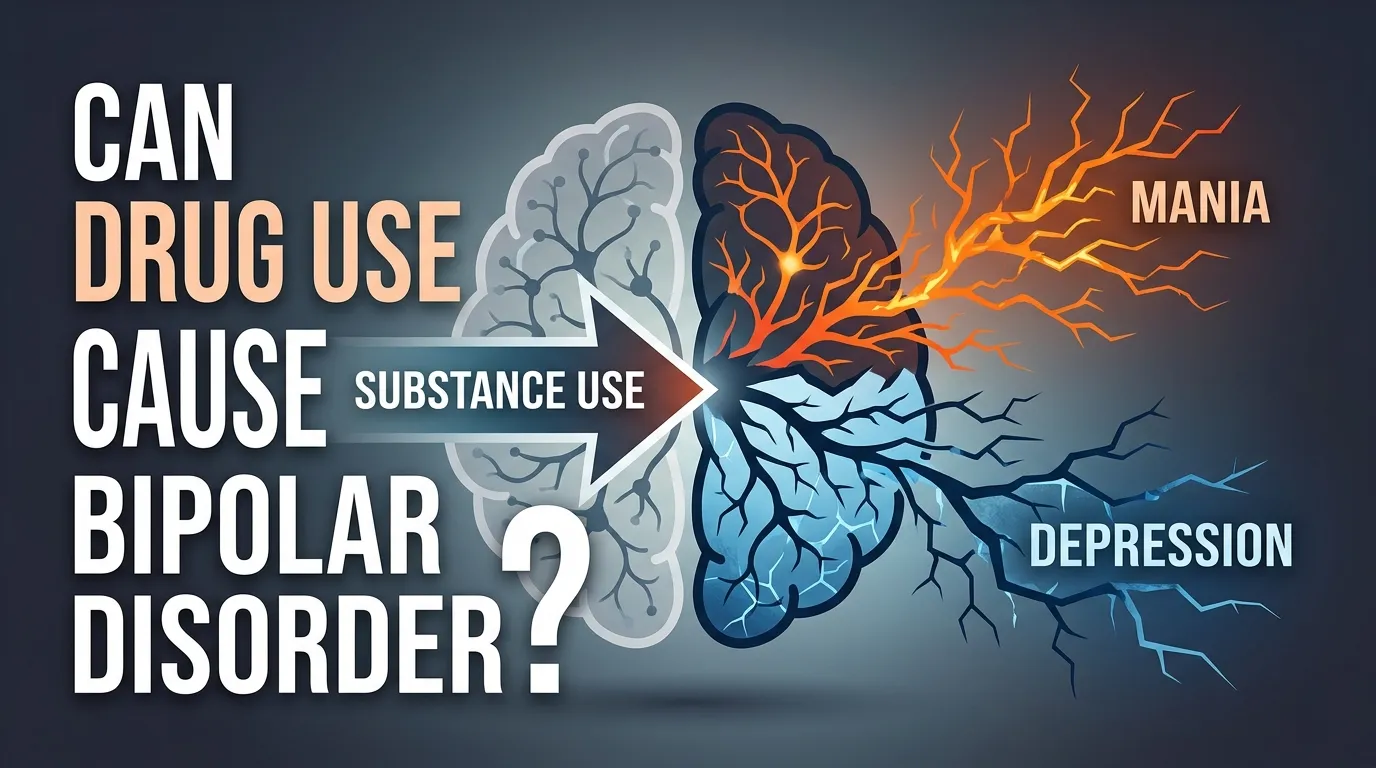
Drug use and bipolar disorder are closely connected, but the relationship is medically complex. Many people ask, “Can drug use cause bipolar disorder?” or “Does drug use cause bipolar disorder?” after experiencing severe mood swings, manic behavior, or depression following substance use.
Mental health experts generally do not consider substance abuse to be the sole direct cause of bipolar disorder in every case. However, certain drugs can trigger bipolar episodes, worsen existing symptoms, or lead to substance-induced bipolar disorder in vulnerable individuals. According to psychiatric research, stimulant drugs, cannabis, hallucinogens, alcohol, and prescription drug abuse can significantly affect brain chemistry and emotional regulation.
Substance abuse and mental health disorders frequently occur together. This is known as a co-occurring disorder or dual diagnosis. Some individuals use drugs to self-medicate bipolar symptoms, while others develop mood instability after prolonged substance use. Because drug effects can closely resemble mania, depression, or psychosis, diagnosis can be difficult without a professional psychiatric evaluation.
Understanding the relationship between drug abuse and bipolar disorder is important for early intervention, accurate diagnosis, and effective treatment.
Can Drug Use Cause Bipolar Disorder?
Drug use may not directly create bipolar disorder in every person, but substance abuse can:
- Trigger bipolar symptoms in genetically vulnerable individuals
- Cause substance-induced bipolar disorder
- Increase the risk of manic or depressive episodes
- Worsen pre-existing bipolar disorder
- Contribute to long-term psychiatric complications
Certain substances linked to bipolar symptoms include:
- Cocaine
- Methamphetamine
- Cannabis and marijuana
- Hallucinogens
- Alcohol
- Prescription stimulants
Understanding Bipolar Disorder and How It Develops
What Is Bipolar Disorder?
Bipolar disorder is a chronic mental health condition characterized by unusual shifts in mood, energy, activity levels, and behavior. These mood changes typically include periods of mania or hypomania followed by episodes of depression.
The condition affects emotional regulation and can interfere with relationships, work, decision-making, sleep, and daily functioning. According to psychiatric diagnostic standards such as the DSM-5, bipolar disorder exists on a spectrum and includes several forms, including:
- Bipolar I disorder
- Bipolar II disorder
- Cyclothymic disorder
- Substance-induced bipolar disorder
People often confuse temporary mood swings with bipolar disorder, but clinical bipolar disorder involves persistent and measurable changes in mood and behavior.

Common Symptoms of Bipolar Disorder
The symptoms of bipolar disorder vary depending on whether a person is experiencing mania, hypomania, or depression.
Manic Episodes
A manic episode involves abnormally elevated mood and energy lasting several days or longer. Symptoms may include:
- Increased energy or hyperactivity
- Reduced need for sleep
- Racing thoughts
- Impulsive behavior
- Risk-taking actions
- Irritability or aggression
- Grandiose thinking
Drug abuse and manic episodes can appear very similar, especially when stimulants such as cocaine or methamphetamine are involved.
Depressive Episodes
Depressive episodes involve persistent sadness or loss of interest in activities. Symptoms commonly include:
- Fatigue
- Low motivation
- Feelings of hopelessness
- Difficulty concentrating
- Changes in appetite
- Sleep disturbances
- Suicidal thoughts in severe cases
Alcohol and substance abuse may intensify depressive symptoms and worsen mood instability.
Hypomania and Mixed Episodes
Hypomania is a milder form of mania that still affects judgment and behavior. Some individuals also experience mixed episodes, where symptoms of depression and mania occur simultaneously.
These overlapping symptoms can complicate bipolar disorder diagnosis after substance abuse because many psychoactive drugs produce similar psychological effects.
What Causes Bipolar Disorder?
Mental health researchers believe bipolar disorder develops from a combination of biological, environmental, and psychological factors rather than a single cause.
Genetics and Family History
Genetics and bipolar disorder are strongly connected. Individuals with a family history of bipolar disorder or other psychiatric disorders may have a higher risk of developing the condition.
Drug use may increase the likelihood of symptom activation in people who already have an underlying vulnerability.
Environmental and Psychological Factors
Several environmental causes of bipolar disorder may contribute to symptom development, including:
- Chronic stress
- Trauma
- Sleep disruption
- Emotional instability
- Substance abuse
- Major life changes
Trauma, substance abuse, and bipolar disorder are often interconnected in behavioral health settings.
Brain Chemistry and Dopamine Imbalance
Researchers studying how drugs affect brain chemistry have identified dopamine imbalance as a possible factor in bipolar disorder.
Dopamine is a neurotransmitter involved in:
- Reward processing
- Motivation
- Emotional regulation
- Pleasure responses
Many stimulant drugs sharply increase dopamine activity. Over time, this may contribute to mood instability, impulsivity, and psychiatric symptoms.
Substances associated with dopamine disruption include:
| Substance | Possible Brain Effect | Potential Mental Health Impact |
|---|---|---|
| Cocaine | Sudden dopamine surge | Mania-like symptoms |
| Methamphetamine | Excess dopamine release | Psychosis and mood instability |
| Cannabis | Alters neurotransmitter signaling | Anxiety, paranoia, mood changes |
| Alcohol | Depresses central nervous system | Depression and emotional dysregulation |

Can Drug Use Cause Bipolar Disorder or Trigger Symptoms?
This is one of the most important distinctions in psychiatry.
Current evidence suggests that drugs may not directly cause bipolar disorder in every person. However, substance abuse can:
- Trigger bipolar episodes
- Reveal underlying bipolar disorder
- Mimic bipolar symptoms
- Worsen existing psychiatric conditions
- Cause substance-induced mood disorders
Individuals with genetic predisposition, existing mental health vulnerabilities, or long-term substance abuse histories may face greater risk.
Mental health professionals often differentiate between:
- Primary bipolar disorder
- Drug-induced mood disorder
- Substance-induced bipolar disorder
- Drug-induced psychosis
Because symptoms overlap significantly, accurate diagnosis usually requires:
- Psychiatric assessment
- Substance use history
- Observation during sobriety
- Long-term symptom monitoring
Key Takeaways
- Bipolar disorder involves recurring manic and depressive episodes.
- Drug use and bipolar disorder are strongly connected but not identical conditions.
- Certain drugs can trigger bipolar symptoms or worsen mood instability.
- Genetics, environment, trauma, and brain chemistry all contribute to bipolar disorder risk.
- Substance-induced bipolar disorder differs from primary bipolar disorder.
Common Misconceptions
| Misconception | Reality |
|---|---|
| Drug use always causes bipolar disorder | Substance abuse may trigger or worsen symptoms, but it is not always the sole cause |
| Mania after drug use automatically means bipolar disorder | Drug-induced symptoms can mimic bipolar episodes |
| Bipolar disorder only involves mood swings | The condition involves clinically significant mood episodes and behavioral changes |
| Substance-induced symptoms are always permanent | Some symptoms improve after sobriety and treatment |
How Drug Use Affects the Brain and Mental Health
Drug use can significantly alter brain chemistry, emotional regulation, and cognitive function. Many psychoactive substances affect neurotransmitters that control mood, motivation, sleep, impulse control, and perception. Over time, repeated substance abuse may contribute to severe psychiatric symptoms, including anxiety, depression, psychosis, and mania-like behavior.
This connection explains why questions such as “Does drug use cause bipolar disorder?” and “Can substance abuse trigger bipolar disorder?” are common in behavioral health discussions.
According to mental health researchers, certain individuals may already have a biological vulnerability to bipolar disorder. In these cases, drug use may act as a trigger that activates or intensifies symptoms.
How Psychoactive Drugs Alter Brain Chemistry
Psychoactive drugs interfere with communication systems inside the brain. Many substances affect neurotransmitters, such as:
- Dopamine
- Serotonin
- Norepinephrine
- GABA
- Glutamate
These chemical messengers influence:
- Mood stability
- Emotional responses
- Reward processing
- Energy levels
- Sleep patterns
- Decision-making
When drugs artificially increase or suppress neurotransmitter activity, mood and behavior can change rapidly.
For example:
- Stimulants may produce excessive energy and euphoria
- Depressants may slow emotional processing
- Hallucinogens may distort perception and thinking
- Cannabis may affect emotional regulation and cognition
Repeated disruption of these systems may contribute to long-term mental health effects of substance abuse.

Can Substance Abuse Trigger Bipolar Disorder?
Substance abuse may trigger bipolar symptoms in some individuals, especially those with:
- Genetic predisposition
- Existing psychiatric conditions
- Childhood trauma
- Chronic stress exposure
- Sleep disturbances
Clinical evidence suggests that drugs linked to bipolar disorder may activate manic or depressive symptoms that otherwise remained dormant.
Common examples include:
- Cocaine triggering manic behavior
- Methamphetamine causing psychosis-like symptoms
- Cannabis increasing paranoia or mood instability
- Alcohol worsening depressive episodes
This does not necessarily mean the drugs permanently caused bipolar disorder. In many cases, substances reveal or intensify an underlying vulnerability.
Difference Between Triggering Symptoms and Causing Bipolar Disorder
One of the most misunderstood aspects of psychiatric disorders caused by drugs is the difference between:
- Triggering symptoms
- Causing a chronic mental illness
A person may experience:
- Mania after stimulant use
- Depression after alcohol abuse
- Mood swings during withdrawal
- Psychosis after hallucinogen exposure
These symptoms may disappear after detoxification and stabilization.
However, if symptoms continue during long-term sobriety, mental health professionals may evaluate for:
- Bipolar I disorder
- Bipolar II disorder
- Substance-induced bipolar disorder
- Other mood disorders
This distinction is important because bipolar disorder symptoms vs drug effects can look nearly identical during active substance use.
Drugs Linked to Bipolar Disorder and Mood Episodes
Certain substances are more strongly associated with manic episodes, mood instability, and psychiatric complications.
Cocaine and Bipolar Disorder
Cocaine is a powerful stimulant that rapidly increases dopamine levels in the brain. This can produce:
- Extreme energy
- Impulsivity
- Grandiosity
- Aggression
- Reduced need for sleep
These effects closely resemble manic episodes. Long-term cocaine abuse may also contribute to depression, anxiety, and paranoia after the stimulant effects wear off.
People with bipolar disorder may experience more severe manic symptoms when using cocaine.
Methamphetamine and Bipolar Disorder
Methamphetamine is strongly associated with psychiatric effects of drug use, including:
- Severe agitation
- Hallucinations
- Paranoia
- Mood instability
- Violent behavior
- Drug-induced psychosis
Methamphetamine dramatically alters dopamine activity and can produce prolonged psychiatric symptoms even after use stops.
Because methamphetamine and bipolar disorder share overlapping symptoms, diagnosis often requires careful psychiatric evaluation.
Cannabis and Bipolar Disorder
Cannabis and bipolar disorder remain heavily studied in psychiatric research.
Some evidence suggests that marijuana and bipolar disorder may be linked through:
- Increased psychosis risk
- Mood dysregulation
- Anxiety symptoms
- Emotional instability
High-potency cannabis products may increase psychiatric risks in vulnerable individuals, particularly adolescents and young adults.
Cannabis does not affect everyone equally. However, individuals with a personal or family history of mental illness may face greater vulnerability.
Hallucinogens and Bipolar Symptoms
Hallucinogens such as LSD and psilocybin alter perception, emotions, and sensory experiences.
Potential psychiatric effects include:
- Confusion
- Panic reactions
- Paranoia
- Emotional instability
- Hallucinations
In some cases, hallucinogens and bipolar disorder symptoms may overlap, especially during acute intoxication or psychological distress.
Alcohol and Bipolar Disorder
Alcohol and bipolar disorder are frequently connected in dual diagnosis cases.
Alcohol may:
- Intensify depressive symptoms
- Increase impulsive behavior
- Disrupt sleep patterns
- Worsen emotional instability
- Interfere with psychiatric medications
Chronic alcohol abuse may also complicate treatment and recovery.
Prescription Drug Abuse and Bipolar Symptoms
Prescription drug abuse and bipolar disorder may involve:
- Stimulant misuse
- Sedative abuse
- Opioid misuse
Prescription stimulants can contribute to:
- Hyperactivity
- Insomnia
- Mood swings
- Mania-like symptoms
Sedatives and opioids may worsen depression symptoms and emotional dysregulation.
Drug Types and Possible Mental Health Effects
| Drug Type | Possible Brain Effect | Potential Bipolar-Related Symptoms |
|---|---|---|
| Cocaine | Dopamine surge | Mania, impulsivity |
| Methamphetamine | Excess dopamine release | Psychosis, agitation |
| Cannabis | Neurotransmitter disruption | Mood swings, paranoia |
| Hallucinogens | Altered perception | Emotional instability |
| Alcohol | Central nervous system depression | Depression symptoms |
| Prescription stimulants | Increased alertness and dopamine | Mania-like behavior |
Summary
Can drugs trigger bipolar episodes?
Yes. Certain drugs can trigger manic or depressive symptoms, especially in individuals with genetic or psychological vulnerability.
Which drugs are most linked to bipolar symptoms?
Cocaine, methamphetamine, cannabis, hallucinogens, alcohol, and prescription stimulants are commonly associated with mood instability and psychiatric symptoms.
Can long-term drug use affect mental health?
Long-term substance abuse may contribute to anxiety, depression, psychosis, emotional dysregulation, and substance-induced mood disorders.
Key Takeaways
- Drugs affect neurotransmitters involved in mood regulation.
- Substance abuse can trigger bipolar symptoms without permanently causing bipolar disorder.
- Stimulants are strongly associated with manic symptoms.
- Cannabis, alcohol, and hallucinogens may worsen mental health instability.
- Drug-induced psychiatric symptoms often resemble bipolar disorder.
Common Mistakes and Misconceptions
| Misconception | Clinical Reality |
|---|---|
| All mood swings after drug use mean bipolar disorder | Temporary drug effects may mimic bipolar symptoms |
| Cannabis is harmless for mental health | Cannabis may increase psychiatric risk in vulnerable individuals |
| Stimulants only affect energy levels | Stimulants can also affect mood, perception, and behavior |
| Drug-induced mania and bipolar mania are always identical | Professionals evaluate symptom duration and sobriety history |
Substance-Induced Bipolar Disorder vs Bipolar Disorder
Mental health professionals often face a difficult diagnostic challenge when evaluating bipolar symptoms after drug use. Many psychoactive substances can produce mood changes that resemble bipolar disorder, including mania, depression, agitation, impulsive behavior, and psychosis.
This overlap is why clinicians carefully distinguish between:
- Primary bipolar disorder
- Substance-induced bipolar disorder
- Drug-induced psychosis
- Temporary substance-related mood symptoms
Understanding this distinction is important for accurate diagnosis, treatment planning, and long-term recovery.
For a broader context on addiction-related psychiatric conditions, many clinicians classify these disorders under substance-related and addictive disorders, which include behavioral and chemical dependency conditions linked to mental health changes.
What Is Substance-Induced Bipolar Disorder?
Substance-induced bipolar disorder is a psychiatric condition in which manic, hypomanic, or depressive symptoms develop during or shortly after:
- Drug intoxication
- Substance withdrawal
- Medication exposure
- Heavy substance abuse
According to psychiatric diagnostic standards, symptoms must be strongly connected to substance use rather than occurring independently.
Common symptoms may include:
- Elevated mood
- Irritability
- Racing thoughts
- Impulsive behavior
- Sleep disturbances
- Depression symptoms
- Mood swings
- Agitation
The condition may resemble bipolar I disorder or bipolar II disorder, but the symptoms are directly associated with substance exposure.
Signs of Substance-Induced Bipolar Disorder
Signs of substance-induced bipolar disorder often appear:
- During heavy drug use
- Shortly after intoxication
- During withdrawal periods
- After misuse of stimulants or psychoactive substances
Behavioral health professionals look for patterns connecting symptoms to substance exposure.
Common Warning Signs
| Symptom | Possible Substance Connection |
|---|---|
| Sudden mania | Cocaine or methamphetamine use |
| Severe mood swings | Polysubstance abuse |
| Aggressive behavior | Stimulant intoxication |
| Depression after intoxication | Alcohol or sedative withdrawal |
| Paranoia or psychosis | Cannabis or methamphetamine use |
| Reduced need for sleep | Stimulant-related mania |
Symptoms may improve after detoxification and sustained sobriety. However, persistent psychiatric symptoms may indicate an underlying bipolar disorder or another mental health condition.
Difference Between Bipolar Disorder and Drug-Induced Psychosis
The difference between bipolar disorder and drug-induced psychosis is medically important because treatment strategies may differ.
Bipolar Disorder
Bipolar disorder is a chronic mood disorder involving recurring episodes of:
- Mania
- Hypomania
- Depression
Symptoms often continue independently of substance use.
Drug-Induced Psychosis
Drug-induced psychosis occurs when substances temporarily disrupt perception and thinking. Symptoms may include:
- Hallucinations
- Delusions
- Severe paranoia
- Disorganized thinking
- Confusion
Stimulants, cannabis, hallucinogens, and methamphetamine are commonly associated with psychotic symptoms.
In some cases, psychosis resolves after the drug leaves the body. In other situations, prolonged substance abuse may increase long-term psychiatric risk.
Can Recreational Drugs Cause Long-Term Mental Illness?
Researchers continue studying whether recreational drugs can cause permanent psychiatric disorders.
Current evidence suggests:
- Drug use may not directly create bipolar disorder in all individuals
- Certain substances may trigger symptoms in vulnerable people
- Long-term substance abuse can worsen mental health conditions
- Chronic drug exposure may alter emotional regulation and brain chemistry
Individuals with:
- Family history of bipolar disorder
- Trauma exposure
- Anxiety disorders
- Depression
- Adolescent substance use
may face higher psychiatric vulnerability.
The relationship between drug abuse and mental illness is often influenced by multiple overlapping biological and environmental factors.
Bipolar Symptoms After Drug Use
Bipolar symptoms after drug use may include:
- Euphoria
- Irritability
- Depression
- Emotional instability
- Risk-taking behavior
- Sleep disruption
- Racing thoughts
These symptoms can occur:
- During intoxication
- During withdrawal
- After long-term substance abuse
Because bipolar disorder symptoms vs drug effects overlap significantly, clinicians usually observe whether symptoms continue during periods of sobriety.
Why Diagnosis Can Be Difficult
Diagnosing bipolar disorder after substance abuse is challenging because many drugs imitate psychiatric symptoms.
For example:
- Methamphetamine may resemble severe mania
- Alcohol withdrawal may resemble anxiety disorders
- Cocaine intoxication may mimic hypomania
- Cannabis-related paranoia may resemble psychosis
Mental health professionals often evaluate:
- Timing of symptoms
- Substance use history
- Family psychiatric history
- Severity and duration of mood episodes
- Symptom persistence during sobriety
Accurate diagnosis may require weeks or months of observation.
Bipolar Disorder vs Substance-Induced Bipolar Disorder
| Feature | Bipolar Disorder | Substance-Induced Bipolar Disorder |
|---|---|---|
| Main Cause | Multifactorial mental illness | Directly linked to substance use |
| Symptom Timing | Occurs independently | Appears during or after substance use |
| Duration | Chronic and recurring | May improve with sobriety |
| Mania Symptoms | Common | Common |
| Depression Symptoms | Common | Common |
| Treatment Focus | Mood stabilization | Detox + psychiatric stabilization |
| Diagnostic Challenge | Moderate | High due to overlapping symptoms |
Internal Behavioral Health Context
Substance-induced mood disorders are frequently associated with broader addiction conditions. For example, alcohol misuse is strongly connected to depression, anxiety, and mood instability. Understanding the distinction between clinical addiction terminology can help clarify diagnosis and treatment planning. Learn more in our guide on whether alcohol use disorder is the same as alcoholism.
Summary
What is substance-induced bipolar disorder?
It is a mood disorder where manic or depressive symptoms develop because of substance use, intoxication, withdrawal, or medication exposure.
Can drugs mimic bipolar disorder?
Yes. Stimulants, cannabis, alcohol, and hallucinogens can produce symptoms similar to mania, depression, or psychosis.
What is the difference between bipolar disorder and drug-induced psychosis?
Bipolar disorder is a chronic mood disorder, while drug-induced psychosis is a substance-triggered disturbance in perception and thinking.
Key Takeaways
- Substance-induced bipolar disorder is directly connected to substance use.
- Drug-induced psychiatric symptoms can resemble bipolar disorder.
- Diagnosis often requires observation during sobriety.
- Stimulants and cannabis are strongly associated with mood instability and psychosis risk.
- Long-term substance abuse may worsen existing mental health conditions.
Common Misconceptions
| Misconception | Reality |
|---|---|
| Drug-induced symptoms always mean permanent bipolar disorder | Some symptoms resolve after sobriety |
| Psychosis and bipolar disorder are identical | They are separate psychiatric conditions |
| Recreational drugs only affect a temporary mood | Long-term mental health effects are possible |
| Diagnosis can happen immediately after intoxication | Accurate diagnosis often requires sustained observation |
The Relationship Between Bipolar Disorder and Substance Abuse
Bipolar disorder and substance abuse frequently occur together in behavioral health settings. Mental health professionals refer to this as a co-occurring disorder or dual diagnosis. According to psychiatric research, individuals with bipolar disorder have a higher risk of developing addiction, while long-term substance abuse may worsen emotional instability and psychiatric symptoms.
This relationship is complex because:
- Drugs can intensify bipolar symptoms
- Bipolar disorder may increase addiction risk
- Substance abuse can interfere with treatment
- Mood instability may encourage self-medication behavior
Understanding the connection between bipolar disorder and addiction is essential for accurate diagnosis and long-term recovery.
For clinical information about co-occurring mental health and addiction conditions, the Substance Abuse and Mental Health Services Administration (SAMHSA) provides evidence-based behavioral health resources and treatment guidance.
Why Bipolar Disorder and Addiction Commonly Occur Together
Several biological and psychological factors explain why bipolar disorder and substance abuse often coexist.
Shared Risk Factors
Common risk factors include:
- Genetics
- Trauma exposure
- Chronic stress
- Emotional dysregulation
- Impulsivity
- Environmental instability
Individuals experiencing untreated bipolar symptoms may turn to substances to temporarily manage emotional distress.
Brain Reward System Involvement
Both addiction and bipolar disorder involve changes in brain reward pathways and dopamine regulation.
Drugs can temporarily increase:
- Pleasure
- Energy
- Confidence
- Emotional numbness
However, repeated substance abuse may disrupt normal emotional functioning and worsen psychiatric instability over time.
Self-Medication and Bipolar Disorder
Self-medication occurs when individuals use drugs or alcohol to cope with mental health symptoms.
People experiencing bipolar disorder may misuse substances to:
- Reduce depressive symptoms
- Increase energy
- Escape emotional pain
- Improve sleep
- Calm anxiety
- Control racing thoughts
Unfortunately, self-medication often creates a dangerous cycle:
- Temporary emotional relief
- Increased substance dependence
- Worsening psychiatric symptoms
- Greater mood instability
- Higher relapse risk
This cycle is common in co-occurring bipolar disorder and addiction cases.
Drug Abuse and Manic Episodes
Drug abuse and manic episodes are strongly connected, especially with stimulant substances.
Stimulants such as:
- Cocaine
- Methamphetamine
- Prescription amphetamines
may produce symptoms similar to mania, including:
- Elevated mood
- Increased energy
- Impulsivity
- Aggression
- Reduced sleep
- Risk-taking behavior
For individuals already diagnosed with bipolar disorder, stimulant use may intensify manic episodes and increase hospitalization risk.
Drug Abuse and Depression Symptoms
Substance abuse can also worsen depressive symptoms.
Alcohol, opioids, and sedatives may contribute to:
- Emotional numbness
- Fatigue
- Hopelessness
- Social withdrawal
- Sleep disruption
- Suicidal thinking
Many substances initially create temporary emotional relief but later contribute to deeper psychological distress.
Alcohol-related depression symptoms are especially common in long-term addiction cases.
Dual Diagnosis: Co-Occurring Bipolar Disorder and Addiction
A dual diagnosis means a person has:
- A mental health disorder
- A substance use disorder
Simultaneously.
Dual diagnosis bipolar disorder cases are medically complex because each condition can worsen the other.
Common Challenges in Dual Diagnosis
| Challenge | Clinical Impact |
|---|---|
| Mood instability | Increases relapse risk |
| Substance cravings | Interferes with treatment |
| Medication noncompliance | Worsens symptoms |
| Impulsive behavior | Raises safety concerns |
| Sleep disruption | Intensifies manic symptoms |
Integrated treatment is often necessary because treating only addiction or only bipolar disorder may lead to incomplete recovery.
Can Drugs Worsen Bipolar Disorder?
Yes. Drugs can worsen bipolar disorder in several ways.
Substance abuse may:
- Increase manic episodes
- Intensify depression symptoms
- Trigger emotional instability
- Reduce medication effectiveness
- Increase impulsive behavior
- Raise suicide risk
- Interfere with sleep regulation
Sleep disruption is particularly important because lack of sleep is a known trigger for bipolar episodes.
Long-term drug abuse may also increase:
- Psychiatric hospitalizations
- Relationship problems
- Occupational impairment
- Legal and financial difficulties
Effects of Substance Abuse on Bipolar Disorder
| Substance Type | Potential Impact on Bipolar Disorder |
|---|---|
| Cocaine | Increased mania and impulsivity |
| Methamphetamine | Severe agitation and psychosis risk |
| Alcohol | Increased depression and emotional instability |
| Cannabis | Mood dysregulation and paranoia |
| Prescription stimulants | Sleep disruption and mania-like symptoms |
| Sedatives | Emotional suppression and depressive symptoms |
Summary
Why are bipolar disorder and addiction connected?
Both conditions involve emotional regulation difficulties, dopamine dysregulation, and overlapping psychological risk factors.
Can addiction cause bipolar disorder?
Addiction alone may not directly cause bipolar disorder, but substance abuse can trigger symptoms, worsen existing bipolar disorder, or contribute to substance-induced mood disorders.
Can drugs worsen bipolar episodes?
Yes. Stimulants, alcohol, cannabis, and other substances may intensify manic or depressive symptoms and interfere with treatment.
Key Takeaways
- Bipolar disorder and substance abuse commonly occur together.
- Self-medication may temporarily reduce distress but often worsens symptoms.
- Stimulants are strongly associated with manic episodes.
- Alcohol and sedatives may worsen depressive symptoms.
- Integrated treatment is important for dual diagnosis recovery.
Common Misconceptions
| Misconception | Clinical Reality |
|---|---|
| Addiction and bipolar disorder are unrelated | They frequently coexist and influence each other |
| Drugs help stabilize bipolar symptoms | Substance abuse often worsens mood instability |
| Self-medication is effective long term | It commonly increases psychiatric complications |
| Treating addiction alone resolves bipolar symptoms | Both conditions usually require integrated care |
Treatment, Recovery, and When to Seek Help
Treatment for bipolar disorder and substance abuse requires a comprehensive behavioral health approach. Because these conditions often occur together, mental health professionals usually recommend integrated treatment that addresses both mood symptoms and addiction simultaneously.
People asking “can drug use cause bipolar disorder?” are often searching for clarity after experiencing mood instability, manic episodes, depression, or psychiatric symptoms related to substance use. Early intervention is important because untreated co-occurring disorders may increase the risk of:
- Relapse
- Hospitalization
- Self-harm
- Relationship difficulties
- Occupational impairment
- Long-term mental health complications
Recovery is possible with proper psychiatric care, substance abuse treatment, and long-term support.
Treating Bipolar Disorder and Addiction Together
Treating bipolar disorder and addiction separately may lead to incomplete stabilization. Integrated care is considered one of the most effective approaches for dual diagnosis treatment.
Behavioral health professionals typically focus on:
- Mood stabilization
- Substance detoxification
- Relapse prevention
- Emotional regulation
- Sleep stabilization
- Long-term psychiatric support
Integrated treatment plans are individualized based on:
- Severity of substance use
- Psychiatric symptoms
- Physical health
- Family history
- Trauma exposure
- Risk of self-harm
Behavioral Health Treatment Options
Several evidence-based approaches are commonly used in bipolar disorder treatment for substance abuse patients.
Detox and Stabilization
Medical detoxification may be necessary for individuals withdrawing from:
- Alcohol
- Opioids
- Benzodiazepines
- Stimulants
Detox helps manage withdrawal symptoms while reducing medical and psychiatric risks.
Stabilization may also involve:
- Sleep restoration
- Nutritional support
- Psychiatric monitoring
- Crisis intervention
Medication Management
Psychiatrists may prescribe medications to stabilize mood symptoms and reduce psychiatric complications.
Common medication categories include:
- Mood stabilizers
- Antipsychotic medications
- Antidepressants in selected cases
- Anti-anxiety medications under supervision
Medication management is especially important because some substances can interfere with psychiatric treatment effectiveness.
Psychotherapy and CBT
Psychotherapy helps individuals understand:
- Emotional triggers
- Substance use patterns
- Stress responses
- Negative thought patterns
Cognitive Behavioral Therapy (CBT) is frequently used to improve:
- Emotional regulation
- Coping strategies
- Impulse control
- Relapse prevention
Therapy may also address:
- Trauma
- Anxiety
- Depression
- Relationship difficulties
Integrated Dual Diagnosis Treatment
Dual diagnosis treatment combines addiction recovery and psychiatric care within one coordinated treatment plan.
Integrated care may include:
- Psychiatric evaluation
- Addiction counseling
- Group therapy
- Medication management
- Family therapy
- Relapse prevention education
Research shows that integrated treatment often improves long-term recovery outcomes for co-occurring bipolar disorder and addiction.
Recovery From Substance-Induced Mood Disorders
Recovery from substance-induced mood disorders depends on several factors, including:
- Duration of substance abuse
- Type of drug used
- Underlying mental health conditions
- Treatment participation
- Support systems
Some individuals experience symptom improvement after:
- Sustained sobriety
- Sleep normalization
- Medical treatment
- Psychiatric stabilization
Others may continue experiencing mood symptoms that require long-term bipolar disorder treatment.
Because bipolar disorder symptoms after drug use may persist, mental health professionals often monitor patients during extended periods of sobriety before making a final diagnosis.
Early Signs That Professional Help Is Needed
A professional behavioral health evaluation may be necessary when symptoms interfere with daily functioning or become dangerous.
Warning Signs Include:
- Extreme mood swings
- Increased impulsive behavior
- Hallucinations or paranoia
- Severe depression
- Aggression or agitation
- Suicidal thoughts
- Substance dependence
- Sleep disruption lasting several days
- Mania-like symptoms after drug use
Immediate professional support is especially important when symptoms involve psychosis, self-harm risk, or unsafe behavior.
Can Teenagers Develop Bipolar Disorder From Drugs?
Adolescents and young adults may be more vulnerable to psychiatric effects of substance abuse because the brain continues developing into early adulthood.
Teen substance use may increase the risk of:
- Mood instability
- Emotional dysregulation
- Anxiety disorders
- Depression
- Psychosis-related symptoms
Cannabis, stimulants, and hallucinogens are frequently studied for their potential impact on adolescent mental health.
However, experts generally believe that drug exposure alone does not fully explain bipolar disorder development. Genetics, trauma, environmental stress, and neurological vulnerability also play important roles.
Early intervention in teenagers with:
- Substance abuse
- Emotional instability
- Family psychiatric history
- Behavioral changes
may reduce long-term mental health complications.
Treatment Approaches for Dual Diagnosis
| Treatment Type | Purpose | Potential Benefit |
|---|---|---|
| Medical Detox | Manage withdrawal safely | Stabilization and reduced risk |
| Mood Stabilizers | Regulate mood episodes | Reduced mania and depression |
| CBT Therapy | Improve coping skills | Better emotional regulation |
| Group Counseling | Peer support | Reduced isolation |
| Integrated Treatment | Address both disorders together | Improved long-term recovery |
| Relapse Prevention Planning | Reduce recurrence risk | Long-term stability |
Summary
How is bipolar disorder treated with substance abuse?
Treatment usually combines psychiatric care, addiction treatment, therapy, medication management, and relapse prevention strategies.
Can substance-induced bipolar disorder improve?
Some individuals experience symptom improvement after sobriety and treatment, while others may require ongoing psychiatric care.
When should someone seek professional help?
Professional evaluation is important when drug use causes severe mood swings, mania, depression, psychosis, or dangerous behavior.
Key Takeaways
- Bipolar disorder and addiction often require integrated treatment.
- Recovery may involve detoxification, therapy, medication, and long-term support.
- Some substance-induced psychiatric symptoms improve with sobriety.
- Early intervention can reduce long-term mental health risks.
- Teenagers may be particularly vulnerable to psychiatric effects of substance abuse.
Common Misconceptions
| Misconception | Clinical Reality |
|---|---|
| Detox alone cures bipolar symptoms | Long-term psychiatric care may still be necessary |
| Recovery happens quickly after sobriety | Stabilization may take time |
| Teen drug use only causes temporary problems | Early substance abuse may increase psychiatric vulnerability |
| Medication alone treats dual diagnosis | Comprehensive behavioral therapy is often necessary |
Conclusion
The connection between drug use and bipolar disorder is medically complex and often misunderstood. While current psychiatric evidence does not show that substance abuse directly causes bipolar disorder in every individual, certain drugs can trigger bipolar symptoms, worsen existing mood instability, or contribute to substance-induced bipolar disorder in vulnerable people.
Stimulants, cannabis, alcohol, hallucinogens, and prescription drug abuse may significantly affect brain chemistry, emotional regulation, and psychiatric functioning. These substances can produce symptoms that resemble mania, depression, or psychosis, making accurate diagnosis challenging without professional evaluation.
Understanding the difference between:
- Primary bipolar disorder
- Substance-induced bipolar disorder
- Drug-induced psychosis
- Temporary substance-related mood symptomsIt
is important for proper treatment and long-term recovery.
Because bipolar disorder and substance abuse frequently occur together, integrated behavioral health treatment is often necessary. Early intervention, psychiatric care, therapy, medication management, and addiction treatment may help reduce complications and improve long-term outcomes.
Individuals experiencing severe mood swings, depression, manic behavior, psychosis, or emotional instability after substance use should seek evaluation from qualified mental health professionals.
FAQs
Can drug use cause bipolar disorder permanently?
Drug use may not permanently cause bipolar disorder in every person, but substance abuse can trigger bipolar symptoms or worsen underlying psychiatric vulnerabilities. In some cases, long-term drug use contributes to substance-induced mood disorders that require ongoing treatment.
What drugs are most associated with bipolar symptoms?
Drugs commonly linked to bipolar symptoms include:
- Cocaine
- Methamphetamine
- Cannabis
- Hallucinogens
- Alcohol
- Prescription stimulants
These substances may trigger mania-like symptoms, depression, paranoia, or emotional instability.
Can marijuana trigger bipolar disorder?
Cannabis may increase the risk of mood instability, paranoia, and psychosis-related symptoms in vulnerable individuals. Some research suggests marijuana use may worsen bipolar symptoms or trigger episodes in people with existing psychiatric risk factors.
What is substance-induced bipolar disorder?
Substance-induced bipolar disorder is a condition where manic or depressive symptoms develop during or shortly after drug use, intoxication, withdrawal, or medication exposure.
How do doctors diagnose bipolar disorder after substance abuse?
Mental health professionals evaluate:
- Substance use history
- Symptom timing
- Family psychiatric history
- Duration of symptoms
- Behavior during sobriety
Because drug effects can mimic bipolar disorder, diagnosis may require long-term observation.
Can bipolar disorder and addiction be treated together?
Yes. Integrated dual diagnosis treatment is commonly recommended for co-occurring bipolar disorder and addiction. Treatment may include therapy, medication management, detoxification, psychiatric care, and relapse prevention support.
What are the early signs of bipolar disorder and substance abuse?
Possible warning signs include:
- Extreme mood swings
- Increased impulsivity
- Sleep disruption
- Depression symptoms
- Mania-like behavior
- Risk-taking actions
- Emotional instability
- Increased substance dependence
Early behavioral health evaluation may improve treatment outcomes.
References
- National Institute on Drug Abuse (NIDA)
- Substance Abuse and Mental Health Services Administration (SAMHSA)
- American Psychiatric Association (DSM-5)
- National Institute of Mental Health (NIMH)
- Mayo Clinic
- Cleveland Clinic
- Peer-reviewed psychiatric and behavioral health journals