
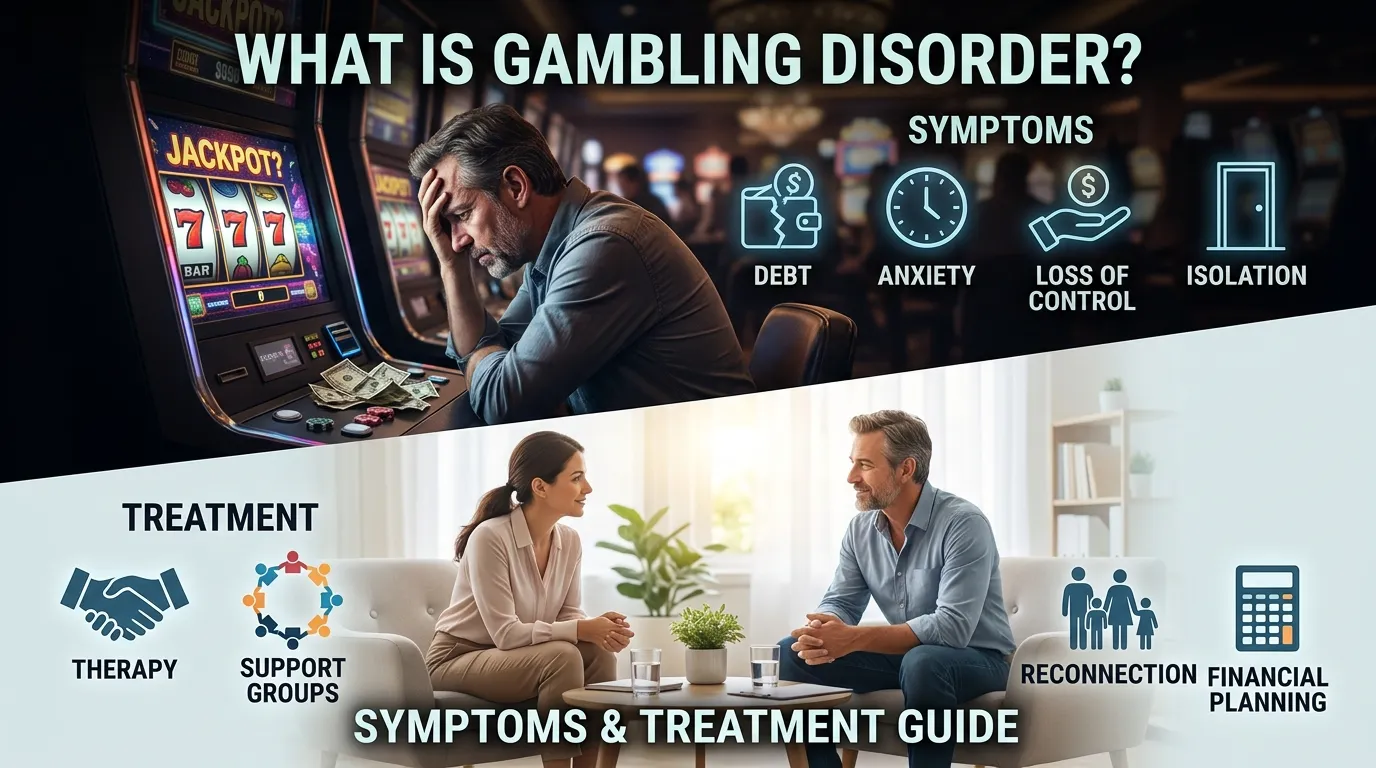
Gambling can start as harmless entertainment—sports betting, casino games, or online slots—but for some people, it becomes something far more serious. When the behavior shifts from occasional play to compulsive engagement despite harmful consequences, it may be a sign of what is gambling disorder.
Gambling disorder is not just a bad habit or lack of discipline. It is a recognized behavioral addiction that affects how the brain processes reward, impulse control, and decision-making. Understanding it early matters because the condition can quietly impact finances, relationships, mental health, and overall stability before it is even recognized.
What Is Gambling Disorder?
Gambling disorder is a behavioral addiction characterized by persistent and recurrent gambling behavior that leads to significant distress or impairment. It is classified in the DSM-5 (Diagnostic and Statistical Manual of Mental Disorders) under “Substance-Related and Addictive Disorders,” even though no substance is involved.
People with gambling disorder struggle to control their gambling habits, often continuing despite negative consequences such as debt, relationship breakdowns, or emotional distress.
A key feature is loss of control—not just frequent gambling, but an inability to stop even when the person wants to.
How Gambling Disorder Develops
Gambling disorder does not appear overnight. It usually develops gradually through repeated reinforcement.
When someone wins, the brain releases dopamine—a neurotransmitter linked to pleasure and reward. Over time, the brain starts associating gambling with excitement and emotional relief, even when losses outweigh wins.
This creates a cycle:
- Anticipation of reward
- Gambling behavior
- Short-term emotional relief or excitement
- Financial or emotional consequences
- Return to gambling to escape distress
This cycle strengthens compulsive behavior over time.

Signs and Symptoms of Gambling Disorder
Recognizing symptoms early is crucial. Common indicators include:
Behavioral Signs
- Needing to gamble with increasing amounts of money
- Unsuccessful attempts to stop or reduce gambling
- Preoccupation with gambling (planning or reliving past bets)
- Gambling to escape stress, anxiety, or depression
- Chasing losses by continuing to gamble
Financial and Life Impact
- Borrowing money frequently
- Selling personal belongings
- Neglecting responsibilities or work
- Strained relationships due to secrecy or lies
Emotional Signs
- Irritability when not gambling
- Anxiety or restlessness
- Guilt after gambling episodes
When multiple signs persist, it may indicate a clinically significant disorder rather than casual gambling behavior.
Causes and Risk Factors of Gambling Disorder
Gambling disorder does not develop from a single cause or a simple lack of self-control. It is better understood as the result of multiple interacting factors that affect how a person thinks, feels, and responds to rewards over time. These factors usually fall into five main areas: biological, psychological, environmental, personality-related, and social influences.
1. Brain Chemistry (Biological Factors)
At the core of gambling behavior is the brain’s reward system, which is heavily influenced by a neurotransmitter called dopamine. Dopamine is responsible for feelings of pleasure, motivation, and reinforcement.
When a person gambles, especially when there is a win or even the anticipation of a win, dopamine levels increase. This creates a strong emotional “reward signal” in the brain. Over time, the brain can start associating gambling not just with money, but with excitement, relief, or escape from stress.
In some individuals, this reward system becomes dysregulated. That means the brain begins to respond more strongly to gambling cues and less strongly to natural rewards like hobbies, social interaction, or work achievements. This imbalance can increase vulnerability to compulsive gambling behaviors, making it harder to stop even when negative consequences are clear.
2. Mental Health Conditions (Psychological Factors)
Gambling disorder often occurs alongside other mental health conditions. This is called comorbidity, and it plays a significant role in both the development and persistence of the disorder.
Conditions such as depression, anxiety, and ADHD can increase risk in different ways:
- Depression may lead individuals to gamble as a way to escape feelings of sadness, emptiness, or hopelessness.
- Anxiety can make gambling feel like a temporary distraction from constant worry or tension.
- ADHD is associated with impulsivity and difficulty delaying gratification, which can make resisting gambling urges more challenging.
In many cases, gambling becomes a coping mechanism for emotional distress. While it may provide short-term relief, it ultimately worsens mental health over time, creating a reinforcing cycle.
3. Environmental Exposure
The environment a person lives in plays a major role in shaping gambling behavior. Today, this factor is more influential than ever due to the rise of online gambling platforms, mobile apps, and 24/7 access to betting services.
Easy accessibility reduces barriers that once limited gambling to physical locations like casinos or betting shops. Now, a person can gamble at any time, from anywhere, often within seconds.
Additional environmental risks include:
- Aggressive advertising and promotional bonuses
- Exposure to gambling in media or sports culture
- Lack of regulation or weak enforcement in certain regions
The more frequently a person is exposed to gambling opportunities, the more normal and routine the behavior can become, increasing the risk of compulsive patterns developing.
4. Personality Traits
Certain personality characteristics are strongly associated with a higher risk of developing gambling disorder.
Two of the most significant traits are:
- Impulsivity: A tendency to act quickly without fully considering consequences. This can make it difficult to stop once gambling begins.
- Sensation-seeking: A preference for excitement, novelty, and risk-taking experiences.
People with these traits may find gambling especially stimulating because it combines uncertainty, risk, and the possibility of reward. This combination can create a powerful psychological pull that reinforces repeated behavior.
It’s important to note that these traits do not guarantee gambling disorder, but they can increase susceptibility when combined with other risk factors.
5. Social Influences
Social and cultural environments can strongly shape attitudes toward gambling. If gambling is normalized or frequently encouraged within someone’s surroundings, the likelihood of engagement increases.
Key social risk factors include:
- Peer influence: Friends or social circles that gamble regularly can normalize the behavior and reduce perceived risk.
- Cultural acceptance: In some communities, gambling is seen as a routine form of entertainment or even a financial strategy, rather than a risk behavior.
- Financial stress: Economic pressure can also push individuals toward gambling as a perceived “quick solution” to money problems, even though it often worsens financial instability.
Social factors are especially powerful because they shape what feels “normal” or acceptable, even when the behavior carries serious risks.

Gambling Disorder vs. Casual Gambling
Not all gambling is harmful. The key difference lies in control and consequences.
- Casual gambling: Occasional, controlled, and within budget
- Gambling disorder: Compulsive, escalating, and harmful despite negative outcomes
The turning point is when gambling stops being a choice and becomes a compulsion.
Co-Occurring Disorders
Gambling disorder often overlaps with other mental health conditions, particularly substance use disorders. This overlap is common because many of these conditions share similar underlying mechanisms, such as impaired impulse control, reward system dysregulation, and difficulties with emotional regulation.
To understand this connection more clearly, it helps to explore how different addictive and substance-related conditions interact. A useful starting point is this overview of what substance-related and addictive disorders are, which explains how addiction affects both behavior and brain function across different conditions.
In some cases, a gambling disorder may also appear alongside mood-related conditions, including bipolar disorder, where periods of heightened impulsivity or emotional instability can increase risky decision-making. Research into whether mood disorders can be influenced by substance use is also relevant here, especially in discussions like can bipolar disorder be caused by drug use.
When these conditions occur together, they can significantly reinforce one another. For example, substance use may weaken impulse control, while gambling can intensify stress and emotional dysregulation. This creates a cycle where each condition makes the other harder to manage, increasing overall vulnerability to addiction and long-term psychological distress.
Treatment Options for Gambling Disorder
Treatment for gambling disorder is not based on a single method. Because the condition involves behavioral patterns, emotional triggers, brain reward systems, and sometimes financial stress, effective recovery usually requires a combination of therapeutic, psychological, and practical interventions. The goal is not only to stop gambling behavior but also to rebuild control, stability, and healthier coping strategies.
1. Cognitive Behavioral Therapy (CBT)
Cognitive Behavioral Therapy (CBT) is one of the most widely used and evidence-supported treatments for gambling disorder.
CBT focuses on the connection between thoughts, emotions, and behaviors. In gambling addiction, individuals often develop distorted thinking patterns such as:
- “I’m due for a win” (gambler’s fallacy)
- “I can win back what I lost” (chasing losses)
- “One more bet will fix everything”
CBT helps individuals:
- Identify these unhelpful thought patterns
- Understand what triggers gambling urges (stress, boredom, financial pressure, etc.)
- Replace gambling behaviors with healthier coping mechanisms
- Build impulse-control strategies
Over time, CBT retrains how a person responds to cravings and high-risk situations, making relapse less likely.
2. Support Groups
Support groups such as Gamblers Anonymous provide a structured, peer-based recovery environment.
Unlike individual therapy, support groups focus on shared experience. Participants connect with others who understand the struggle firsthand, which reduces isolation and shame—two major barriers to recovery.
Key benefits include:
- Regular meetings that create accountability
- Emotional support from peers in recovery
- A structured 12-step recovery framework (in many programs)
- Long-term encouragement to maintain abstinence
For many people, this ongoing community support becomes a critical part of staying recovery-focused, especially during high-risk moments.
3. Medication
There is no single medication specifically approved to “cure” gambling disorder, but certain medications may help manage co-occurring mental health conditions or underlying impulses.
Healthcare providers may consider medications when gambling disorder is linked with:
- Depression
- Anxiety disorders
- ADHD or impulse-control issues
In some cases, medications that affect serotonin or dopamine systems may be used to reduce compulsive urges or stabilize mood. However, medication is typically not a standalone solution—it works best when combined with therapy and behavioral interventions.
4. Financial Counseling
Gambling disorder often leads to financial instability, which can become both a consequence and a trigger for continued gambling.
Financial counseling helps individuals regain control over their economic situation and reduce stress that may fuel relapse.
This can include:
- Creating structured debt repayment plans
- Budgeting and money management education
- Credit repair strategies
- Limiting access to large sums of cash or credit
- Financial accountability systems (trusted family or advisors)
By reducing financial chaos, individuals are less likely to feel overwhelmed or tempted to gamble as a “quick fix.”
5. Digital Barriers and Self-Exclusion Tools
Because modern gambling is heavily digital, technology-based interventions are increasingly important.
Self-exclusion programs allow individuals to voluntarily ban themselves from gambling platforms, casinos, or betting apps for a fixed period or permanently.
Additional tools include:
- Gambling website blockers
- App restrictions on mobile devices
- Payment blocking services for gambling transactions
- Device-level parental or restriction controls
These tools are especially useful in early recovery when urges are still strong, as they reduce immediate access and create a “pause” between impulse and action.

Impact on Mental Health and Life Stability
Untreated gambling disorder can significantly affect:
- Mental health (anxiety, depression, shame)
- Financial security (debt accumulation)
- Relationships (trust issues, isolation)
- Work performance (absenteeism, distraction)
Over time, these effects reinforce the addiction cycle, making early intervention important.
Recovery and Long-Term Outlook
Recovery is not linear. Relapses can occur, but long-term improvement is absolutely possible with consistent support and behavioral change.
Key factors that improve recovery outcomes:
- Strong support system
- Structured therapy
- Avoiding triggers
- Financial safeguards
- Ongoing self-awareness
For further clinical reference, you can explore: National Institute on Drug Abuse (NIDA).
Conclusion
Gambling disorder is a serious but treatable behavioral addiction. It develops gradually, often unnoticed, and can significantly disrupt emotional, financial, and social well-being. However, with early recognition and the right treatment approach, recovery is achievable and sustainable.
The most important step is to acknowledge the pattern and seek support before the consequences deepen.
FAQ
1. Is gambling disorder a mental illness?
Yes. It is classified as a behavioral addiction in the DSM-5.
2. Can gambling disorder be cured?
It cannot be “cured” in a simple sense, but it can be effectively managed with treatment and support.
3. What causes gambling addiction?
A mix of brain chemistry, psychological factors, and environmental influences cause it.
4. How do I know if I have a gambling problem?
If you struggle to stop gambling despite negative consequences, it may indicate a disorder.
5. Is gambling disorder linked to other addictions?
Yes, it often co-occurs with substance use and other addictive behaviors.