
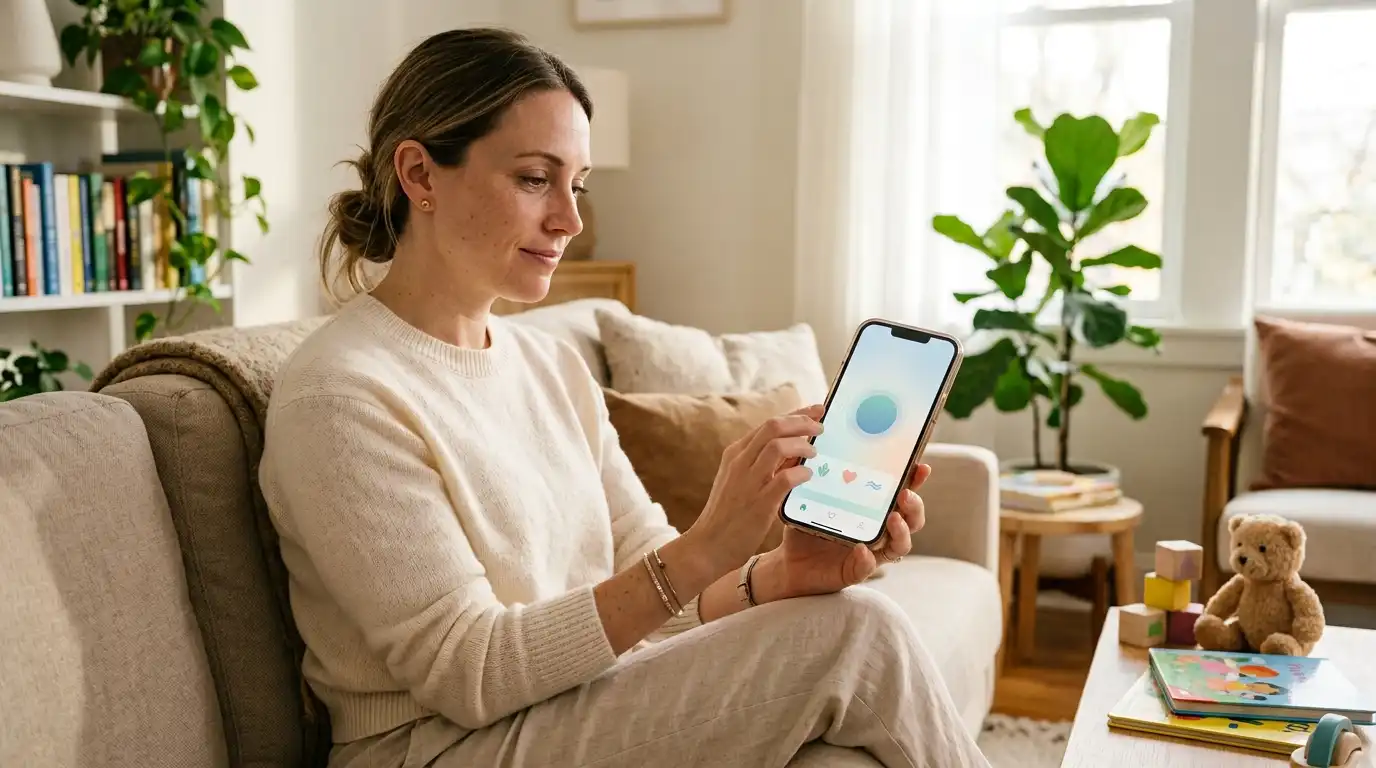
The best mental health apps for overwhelmed moms are those that match a specific need, such as managing stress, easing anxiety, improving sleep, tracking mood, or practicing evidence-based coping skills. An app can offer convenient support during a busy day, but it should not be treated as a replacement for professional mental health care when symptoms are persistent, severe, or affecting daily functioning.
Motherhood can involve competing responsibilities, limited personal time, disrupted sleep, and ongoing emotional demands. Feeling overwhelmed does not automatically mean someone has a mental health disorder, but persistent anxiety, low mood, irritability, exhaustion, or difficulty functioning may deserve closer attention.
A useful starting point is to identify what kind of support is needed. Someone looking for a five-minute breathing exercise may need a very different app from a mother who wants structured cognitive behavioral therapy (CBT) exercises, mood tracking, or access to a licensed therapist.
Our broader guide to best apps for mental health provides additional context on choosing digital mental health tools. For mothers, though, convenience and usability matter alongside clinical considerations. An app that requires long daily sessions or complicated tracking may be difficult to maintain when time and energy are already limited.
The National Institute of Mental Health (NIMH) advises considering factors such as evidence, privacy, developer credentials, and the type of support an app provides. Mental health apps vary considerably in their features and evidence base, so selecting one based solely on popularity or app-store ratings may not provide enough information.

What Mental Health Apps Can Help Overwhelmed Moms With
Mental health apps can help overwhelmed moms with specific self-management needs such as stress reduction, mindfulness, anxiety coping, mood tracking, sleep support, journaling, and guided relaxation. Some apps also provide structured therapy-based exercises or connect users with mental health professionals.
The most useful role for an app depends on what a person is experiencing. A short breathing or grounding exercise may be practical during a stressful moment, while mood tracking can help someone record patterns in sleep, emotions, or daily functioning over time. These tools can support self-awareness and coping without establishing a diagnosis.
Apps based on cognitive behavioral therapy (CBT), a structured form of psychotherapy that addresses connections among thoughts, emotions, and behaviors, may provide exercises for managing unhelpful thought patterns or developing coping skills. Other apps focus primarily on mindfulness, meditation, relaxation, or sleep rather than psychotherapy.
Convenience is one reason digital tools may appeal to busy parents. A mother may be able to complete a brief exercise at home or use a guided relaxation session before bed without arranging an appointment. That convenience, however, does not mean every app has demonstrated clinical effectiveness.
Mothers experiencing symptoms that persist, worsen, or interfere substantially with daily life may need an evaluation from a qualified mental health professional rather than relying on an app alone. Apps are best viewed according to their actual function: some support general well-being, while others may complement professional treatment.

How to Choose the Best Mental Health Apps for Overwhelmed Moms
Choosing the best mental health apps for overwhelmed moms starts with identifying the type of support needed, then checking the app’s evidence, privacy practices, usability, cost, and level of professional involvement. A highly rated app is not necessarily the best fit if its features do not address the user’s specific needs.
For a mother with limited time, usability can matter as much as the number of features. An app with short exercises, clear instructions, and flexible sessions may be easier to use consistently than one that requires lengthy daily activities. The goal is to find a tool that fits realistically into everyday life rather than creating another task to manage.
Evidence should also influence the decision. Look for apps that clearly explain the therapeutic approach behind their features and avoid products making broad claims that they can diagnose, cure, or treat every mental health concern. The National Institute of Mental Health (NIMH) recommends considering an app’s evidence base, developer credentials, privacy practices, and emergency guidance before choosing a mental health app
Privacy deserves particular attention because mental health apps may collect sensitive information about mood, symptoms, habits, or personal circumstances. Before entering this information, review the privacy policy and understand what data the app collects, how it may be used, and whether information may be shared with third parties.
The type of support offered is another meaningful distinction. Some apps are designed for self-guided exercises, while others provide access to therapists or other professionals. For comparison, our article on best mental health apps for teens covers how app selection can change according to the user’s age and needs.
Cost can also affect long-term usefulness. Free features may be enough for basic mindfulness or tracking, while subscriptions may provide additional exercises or professional services. Paying for an app does not, by itself, establish that it is more effective.
Finally, consider whether the app complements existing care. Someone already working with a therapist may use a mood tracker or guided exercise app as an additional tool, while someone with significant symptoms may benefit more from direct professional assessment than from increasing their use of self-guided digital tools.

Best Mental Health App Features for Busy Moms
The most useful mental health app features for busy moms are those that address a specific need without requiring a large time commitment. Common options include mindfulness and breathing exercises for immediate stress management, CBT-based activities for coping skills, mood tracking for recognizing patterns, and sleep or relaxation tools for winding down.
Stress, Anxiety, and Mindfulness Tools
Apps that offer guided breathing, meditation, grounding exercises, or other relaxation techniques can provide a structured way to pause during a stressful day. These features are generally designed to support coping and emotional regulation rather than diagnose or treat a mental health condition.
CBT-based tools can be useful when an app provides structured exercises that help users examine thoughts, identify behavioral patterns, and practice coping strategies. NIMH describes skill-training and self-management apps as examples of digital tools being developed to help people manage concerns such as stress, anxiety, and sleep problems.
For an overwhelmed mom, the practical difference may be how easily a feature fits into daily life. A five-minute guided exercise may be more realistic than a program requiring a long uninterrupted session. Choosing an app that allows flexible use can reduce the risk of turning mental health support into another demanding obligation.
Mindfulness tools should also be viewed realistically. They may help someone practice relaxation or become more aware of thoughts and emotions, but persistent anxiety or other significant symptoms may require assessment and treatment from a qualified professional.
Mood, Sleep, and Symptom Tracking
Mood and symptom tracking can help users record changes in emotions, sleep, energy, or other experiences over time. This information may help a person notice patterns and can provide useful information to discuss with a healthcare professional, but tracking alone cannot establish a diagnosis.
Sleep-focused features can include relaxation exercises, guided meditation, or routines intended to support better sleep habits. For mothers dealing with disrupted schedules, these tools may be useful as part of a broader approach to sleep and well-being.
Some apps also connect users with trained professionals rather than relying entirely on automated exercises. NIMH notes that technology can complement traditional care by extending support and monitoring, while virtual mental health services can provide assessment, therapy, treatment planning, and other professional services.

Are Mental Health Apps Enough for Overwhelmed Moms?
Mental health apps can be useful for self-management and may complement professional care, but they are not a substitute for a mental health evaluation or treatment when symptoms are significant. Their role depends on the type and severity of the problem, the app’s evidence base, and whether the person needs support from a trained professional.
For mild or occasional stress, an app offering breathing exercises, mindfulness, journaling, or other coping strategies may be a reasonable starting point. These tools can provide practical support between responsibilities and may help someone build habits that support emotional well-being.
More persistent symptoms require greater attention. Difficulty concentrating, loss of interest in usual activities, significant sleep problems, persistent low mood, or difficulty completing normal responsibilities can be signs that professional evaluation is appropriate. NIMH recommends seeking professional help when severe or distressing symptoms last two weeks or more or interfere with daily activities.
An app may still have a useful role after professional care begins. For example, a therapist might recommend a mood-tracking tool, guided exercises, or another digital resource as an additional way to practice skills between appointments. NIMH notes that technology can support mental health care, but people should assess an app’s evidence, developer credentials, privacy practices, and emergency guidance rather than assuming that every mental health app is clinically validated.
The distinction matters because feeling overwhelmed can have many causes. Parenting demands, sleep disruption, relationship difficulties, financial pressure, physical health concerns, or a mental health condition can contribute to emotional distress, and an app cannot determine which explanation applies to an individual.
If someone is having thoughts of suicide or self-harm, an app should not be the only source of support. In the United States, call or text 988 for the 988 Suicide & Crisis Lifeline; in a life-threatening emergency, call 911 or go to the nearest emergency department.
Free vs. Paid Mental Health Apps for Moms
Free mental health apps can provide useful features such as mindfulness exercises, journaling, mood tracking, or basic coping tools, while paid apps may offer additional content, structured programs, or access to mental health professionals. Cost alone does not indicate that an app is more effective or clinically appropriate.
For an overwhelmed mom, the practical value of a paid subscription depends on what it adds. Paying may make sense when a service provides features that are genuinely useful, such as a structured CBT-based program, personalized content, or direct access to a licensed professional. If the same need can be met with a reliable free feature, a subscription may add little value.
Before paying, check exactly what the subscription includes and whether important features become unavailable when the trial ends. Look for automatic-renewal terms, cancellation requirements, in-app purchases, and whether the advertised price applies only to an introductory period.
It is also worth evaluating privacy before creating an account or entering sensitive information. Research examining mental health apps has found that privacy practices can vary substantially and that popularity metrics such as app-store ratings do not reliably indicate stronger privacy protections.
A free app can still have meaningful limitations, while a paid app can still make unsupported claims. NIMH recommends considering an app’s evidence, developer credentials, privacy practices, emergency guidance, and whether it offers contact with a trained professional rather than judging it primarily by its price or popularity.
For mothers who want professional support rather than self-guided exercises, the distinction between an app subscription and actual mental health care is particularly relevant. A service that connects users with a qualified clinician should be evaluated based on the credentials and type of care provided, not simply its app features.
When Should an Overwhelmed Mom Talk With a Mental Health Professional?
An overwhelmed mom should consider talking with a mental health professional when emotional symptoms persist, become more severe, or begin interfering with daily responsibilities, relationships, sleep, or the ability to care for herself or others. An app can provide useful support, but persistent or significant symptoms warrant professional evaluation.
Signs that professional support may be appropriate include ongoing sadness or hopelessness, marked irritability, loss of interest in activities, persistent worry, difficulty concentrating, major sleep or appetite changes, or trouble managing normal responsibilities. These symptoms do not by themselves establish a diagnosis, but their persistence and effect on daily functioning are reasons to seek an assessment.
The National Institute of Mental Health recommends seeking professional help when severe symptoms last two weeks or more or interfere with usual activities. A primary care provider can also be a reasonable starting point and may provide an initial screening or refer someone to a psychologist, psychiatrist, social worker, or another qualified mental health professional.
For mothers experiencing concerns during pregnancy or after childbirth, it is also appropriate to discuss significant or persistent emotional changes with a healthcare provider. Perinatal depression is a recognized mental health condition that can occur during pregnancy or after childbirth and is different from the temporary “baby blues.”
If someone is having thoughts of suicide, wants to die, feels trapped or hopeless, or is showing other warning signs of suicide, an app should not be used as the primary response. In the United States, call or text 988 for the 988 Suicide & Crisis Lifeline; for an immediate life-threatening emergency, call 911 or go to the nearest emergency department.
Seeking professional help does not mean a mother has failed to cope. It can provide a clearer assessment of what is happening and help identify appropriate treatment or support when self-guided tools are no longer enough.
Key Takeaways
Mental health apps can be useful tools for overwhelmed moms when they are chosen for a specific purpose and fit realistically into daily life. Features such as mindfulness exercises, CBT-based coping skills, mood tracking, sleep support, and access to professional care can serve different needs, so there is no single app that is best for everyone.
- Choose based on your need, not popularity. Consider whether you want help with stress, anxiety, sleep, mood tracking, coping skills, or professional support.
- Check evidence and privacy. NIMH recommends looking at an app’s evidence, developer credentials, privacy practices, emergency guidance, and whether it offers access to trained professionals.
- Keep expectations realistic. An app can complement mental health care, but persistent or severe symptoms may require assessment and treatment from a qualified professional.
- Prioritize usability. A simple tool that fits naturally into a busy routine may be more practical than an app with extensive features that are difficult to use consistently.
- Know when to seek additional help. If symptoms interfere with daily functioning or raise safety concerns, professional support should take priority over self-guided app use.
Conclusion
The best mental health apps for overwhelmed moms are not necessarily the most popular or feature-rich. A better choice is an app that addresses a specific need, fits realistically into a busy routine, protects personal information, and uses an approach supported by appropriate evidence. NIMH recommends evaluating mental health apps for effectiveness, privacy, developer credentials, emergency guidance, and the availability of professional support.
For some mothers, a brief mindfulness or breathing exercise may provide a practical coping tool during a stressful day. Others may benefit more from mood tracking, structured CBT-based exercises, sleep support, or an app that connects them with a qualified mental health professional.
Digital tools can also complement traditional care. Virtual mental health services may make professional support more accessible for people who have difficulty fitting in-person appointments into a demanding schedule.
An app should not be expected to diagnose a condition or replace professional treatment when symptoms are persistent, severe, or interfering with daily life. If an overwhelmed mom is struggling to function, experiencing significant emotional distress, or has concerns about her safety, seeking professional help is the appropriate next step.
For additional guidance on choosing digital mental health resources for different populations, our related article on best mental health apps for veterans provides another perspective on matching app features with a user’s specific circumstances.
FAQs
What is the best mental health app for an overwhelmed mom?
There is no single mental health app that is best for every mom. The right choice depends on the type of support needed, such as stress management, mindfulness, mood tracking, sleep support, CBT-based exercises, or access to a mental health professional. Evidence, privacy, usability, and cost are also worth considering.
Can mental health apps help with stress and anxiety?
Some mental health apps provide tools such as guided breathing, mindfulness exercises, relaxation techniques, and CBT-based skills that may help with coping. Their effectiveness varies, and an app should not be considered a substitute for professional evaluation or treatment when symptoms are persistent or significantly interfere with daily life.
Are mental health apps safe to use?
Mental health apps can be useful, but privacy and clinical quality vary between products. Before using an app, review its privacy policy, understand what personal information it collects and shares, and check who developed it and whether its approach has supporting evidence. NIMH specifically recommends evaluating these factors before choosing an app.
Can a mental health app replace therapy?
Generally, a self-guided mental health app should not be treated as a replacement for professional mental health care. Some digital services provide access to therapists or other qualified professionals, while others simply offer self-management tools. The level of professional involvement is therefore an important distinction when evaluating an app.
Are there free mental health apps for moms?
Yes. Some mental health apps offer free mindfulness, relaxation, journaling, mood-tracking, or other self-management features. Paid subscriptions may provide additional content or professional services, but cost alone does not establish that an app is more effective.
Can mental health apps help with postpartum depression or anxiety?
An app may provide supportive tools such as relaxation exercises, symptom tracking, or connections to professional care, but significant symptoms during pregnancy or after childbirth should be discussed with a qualified healthcare professional. An app cannot determine whether someone has postpartum depression or another mental health condition.
When should an overwhelmed mom seek professional help?
Professional support is appropriate when symptoms are persistent, severe, or interfere with daily responsibilities, relationships, sleep, or other areas of functioning. If someone is experiencing thoughts of suicide or other immediate safety concerns, an app should not be the primary source of help. In the United States, call or text 988 for the 988 Suicide & Crisis Lifeline; life-threatening emergencies require 911 or an emergency department.
Medical Review Disclosure
Medical Review: This article was medically reviewed by Dr. Gloria Fosu, DNP, PMHNP-BC, to support medical accuracy, appropriate clinical terminology, and responsible presentation of mental health information.
Review Date: August 21, 2026
This content is intended for educational purposes and is not a substitute for individualized medical advice, diagnosis, or treatment. Mental health needs vary from person to person, and readers should consult a qualified healthcare professional for concerns about their symptoms or treatment options.
CTA
If you are feeling overwhelmed and unsure what kind of mental health support you need, an app can be one starting point—but it does not have to be your only option. Consider speaking with a qualified mental health professional who can help you understand what you are experiencing and identify appropriate support.
References
- National Institute of Mental Health. Technology and the Future of Mental Health Treatment. National Institutes of Health.
- National Institute of Mental Health. Psychotherapies. National Institutes of Health.
- National Institute of Mental Health. Warning Signs of Suicide. National Institutes of Health.
- National Institute of Mental Health. Frequently Asked Questions About Suicide. National Institutes of Health.
- Substance Abuse and Mental Health Services Administration. 988 Frequently Asked Questions. U.S. Department of Health and Human Services.