
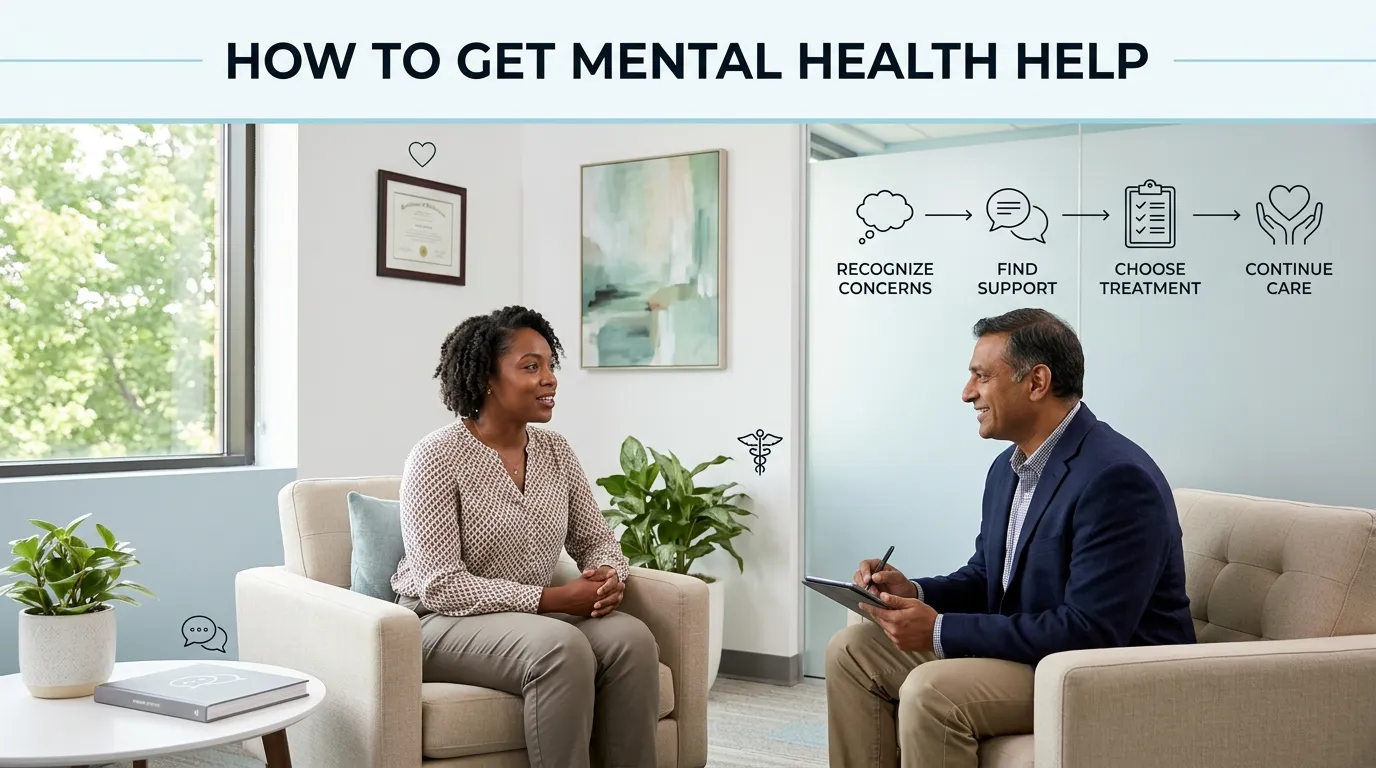
Getting mental health help begins with recognizing that persistent emotional, behavioral, or psychological changes deserve attention. Support can come from many sources—including a primary care provider, therapist, psychiatrist, or other licensed mental health professional. Seeking help early may make symptoms easier to manage and improve quality of life, while immediate care is essential if someone is at risk of harming themselves or others.
Mental health affects how people think, feel, relate to others, and respond to everyday challenges. Everyone experiences stress, sadness, or anxiety from time to time. When these feelings become intense, last for weeks, interfere with work or school, strain relationships, or make daily responsibilities difficult, it may be time to seek professional support rather than trying to cope alone.
Many people delay getting help because they worry about stigma, cost, or not knowing where to begin. Others believe their symptoms are “not serious enough” or hope they will disappear on their own. Mental health conditions exist on a spectrum, and there is no single point at which someone is “deserving” of care. If emotional or behavioral changes are affecting your well-being, speaking with a qualified healthcare professional is a reasonable next step.
Mental health treatment is not one-size-fits-all. Depending on an individual’s needs, care may include psychotherapy (talk therapy), medication, lifestyle changes, peer support, or a combination of approaches. Some people begin by talking with their primary care provider, while others seek care directly from a licensed therapist or psychiatrist. Telehealth services and community mental health programs have also expanded access to care for many people across the United States.
This guide explains how to recognize when professional help may be beneficial, where to find trusted mental health services, what treatment options are available, and what to expect throughout the process. It also covers ways to access affordable care, how to support a loved one who may be struggling, and what to do during a mental health crisis.
Key Takeaways
- Mental health concerns deserve attention when they persist or interfere with daily life.
- Several types of healthcare professionals can provide evaluation, treatment, and ongoing support.
- Treatment may include therapy, medication, lifestyle strategies, or a combination based on individual needs.
- Affordable mental health services are available through insurance plans, community resources, and telehealth programs.
- If someone is experiencing thoughts of suicide, severe impairment, or another mental health emergency, immediate emergency assistance should be sought.
Mental health is an important part of overall healthcare, and understanding when to seek support is a key step toward maintaining emotional and psychological well-being. Explore more resources in our Healthcare category to learn about behavioral health, treatment options, and related wellness topics.
Recognizing When It’s Time to Seek Mental Health Help
Knowing when to seek mental health help is not always straightforward. Emotional ups and downs are a normal part of life, especially during periods of stress or major change. Professional support may be beneficial when symptoms persist, become more intense, or begin affecting your ability to work, attend school, maintain relationships, or care for yourself. Early evaluation can help identify whether these experiences are part of a temporary reaction or a mental health condition that may benefit from treatment.
Mental health concerns can develop gradually or appear after a significant life event, such as the loss of a loved one, a traumatic experience, a serious illness, or ongoing stress. Some people notice emotional changes first, while others experience physical symptoms such as fatigue, headaches, digestive problems, or disrupted sleep without immediately recognizing that mental health may be contributing.
Common signs that it may be time to speak with a healthcare professional include:
- Feeling sad, anxious, or emotionally overwhelmed most days for several weeks.
- Excessive worry that is difficult to control.
- Losing interest in hobbies or activities you once enjoyed.
- Changes in sleep patterns, including insomnia or sleeping much more than usual.
- Significant changes in appetite or weight.
- Difficulty concentrating, remembering information, or making decisions.
- Irritability, frequent mood swings, or emotional outbursts.
- Withdrawing from family, friends, or social activities.
- Declining performance at work or school.
- Using alcohol or drugs more often to cope with emotional distress.
Experiencing one or more of these symptoms does not necessarily mean someone has a mental health disorder. Similar symptoms can occur with certain medical conditions, medication side effects, or major life stressors. A qualified healthcare professional can evaluate these concerns, rule out other possible causes, and recommend the most appropriate next steps.
Seeking help early may prevent symptoms from becoming more disruptive over time. Even if a formal diagnosis is not made, a mental health professional can provide coping strategies, education, and support that improve emotional well-being and resilience.
Warning Signs That Shouldn’t Be Ignored
Some symptoms require prompt professional evaluation because they may indicate a more serious mental health concern. These include persistent feelings of hopelessness, hearing or seeing things that others do not, extreme mood changes, confusion, severe anxiety or panic that interferes with daily functioning, or behaviors that place yourself or others at risk.
Thoughts of self-harm or suicide should always be taken seriously. If you or someone you know is talking about wanting to die, expressing hopelessness, making plans for suicide, or engaging in self-harming behavior, seek immediate help. In the United States, contact the 988 Suicide & Crisis Lifeline by calling or texting 988 for immediate support. If there is an immediate risk of harm or a medical emergency, call 911 or go to the nearest emergency department without delay.
Recognizing these warning signs is not about labeling yourself or someone else with a diagnosis. It is about understanding when professional assessment is the safest and most appropriate course of action. Early intervention often leads to more treatment options and can help people receive the support they need before symptoms become more severe.

Where to Start When You’re Looking for Help
Finding mental health care can feel overwhelming, especially if you’re seeking support for the first time. A practical first step is to talk with a trusted healthcare professional or use reputable resources to identify qualified providers in your area. There is no single “right” place to begin—the best starting point depends on your symptoms, insurance coverage, and personal preferences.
Many people start with their primary care provider (PCP). During an appointment, you can describe your symptoms, how long you’ve been experiencing them, and how they affect your daily life. A primary care provider can evaluate whether an underlying medical condition may be contributing to your symptoms, provide an initial assessment, recommend treatment, prescribe certain medications when appropriate, or refer you to a mental health specialist.
If you already know you would like to see a mental health professional, you can often schedule an appointment directly with a licensed therapist, psychologist, psychiatrist, or psychiatric mental health nurse practitioner. Many insurance plans allow self-referrals, while others may require a referral from your primary care provider. Reviewing your insurance benefits or contacting your insurer can help you understand your coverage before making an appointment.
Several trusted organizations also offer directories and educational resources to help people locate appropriate care. The Substance Abuse and Mental Health Services Administration (SAMHSA) maintains treatment locator resources, while the National Institute of Mental Health (NIMH) provides reliable information about mental health conditions and treatment options. Local community mental health centers, hospitals, and nonprofit organizations may also provide counseling services, support groups, or referrals.
Telehealth has made mental health care more accessible for many people. Virtual appointments allow individuals to meet with licensed providers from home, which may be particularly helpful for those living in rural areas, individuals with transportation challenges, or people who prefer greater privacy. Depending on state regulations and the provider’s practice, telehealth can be used for therapy, medication management, follow-up visits, and ongoing care.
Before scheduling your first appointment, it can be helpful to gather information about your symptoms, current medications, medical history, and any major life changes or stressful events you’ve experienced. Writing down questions beforehand can also make the conversation easier and help ensure you discuss the concerns that matter most to you.
If You’re Helping a Friend or Family Member
Supporting someone with a mental health concern begins with listening without judgment. Rather than trying to diagnose or solve the problem, encourage them to share how they have been feeling and let them know that seeking professional help is a sign of taking care of their health, not a sign of weakness.
Offer practical assistance when appropriate. This might include helping them search for providers, checking insurance coverage, arranging transportation, or sitting with them while they make a phone call to schedule an appointment. Small acts of support can make the process feel less intimidating, particularly for someone experiencing anxiety or depression.
At the same time, respect their autonomy whenever possible. Unless there is an immediate safety concern, treatment decisions should remain theirs. If they express thoughts of suicide, threaten harm to themselves or others, or appear unable to care for themselves safely, seek emergency assistance immediately by contacting 911, going to the nearest emergency department, or reaching out to the 988 Suicide & Crisis Lifeline for guidance.
Remember that caring for someone with a mental health condition can also be emotionally demanding. Family members and caregivers may benefit from seeking education, support groups, or counseling to better understand mental health conditions and maintain their own well-being.
Understanding the Different Types of Mental Health Professionals
Mental health professionals have different education, training, and areas of expertise. Knowing who does what can make it easier to choose the right provider for your needs. Some professionals focus on diagnosis and medication management, while others specialize in psychotherapy, long-term counseling, or helping people manage everyday challenges related to their mental health.
The right provider depends on your symptoms, treatment goals, and personal preferences. In many cases, people receive care from more than one professional. For example, someone might attend weekly therapy sessions with a psychologist or licensed counselor while seeing a psychiatrist or psychiatric nurse practitioner for medication management. Collaborative care allows providers to work together to create a treatment plan that addresses both emotional and medical needs.
Comparison of Mental Health Professionals
| Professional | Primary Role | Can Provide Therapy? | Can Prescribe Medication? |
|---|---|---|---|
| Primary Care Provider (PCP) | Initial evaluation, screening, referrals, basic mental health treatment | Limited counseling during visits | Yes, within their scope of practice |
| Psychiatrist | Diagnosis, treatment planning, medication management | Sometimes | Yes |
| Psychologist | Psychological assessment, diagnosis, psychotherapy | Yes | No (in most U.S. states) |
| Licensed Clinical Social Worker (LCSW) | Counseling, care coordination, resource navigation | Yes | No |
| Licensed Professional Counselor (LPC) | Individual, family, and group counseling | Yes | No |
| Marriage and Family Therapist (LMFT) | Relationship, couples, and family therapy | Yes | No |
| Psychiatric Mental Health Nurse Practitioner (PMHNP) | Mental health assessment, diagnosis, medication management, psychotherapy in some practices | Often | Yes, according to state laws |
A psychiatrist is a medical doctor specializing in mental health. They diagnose mental health conditions, prescribe medications when appropriate, monitor treatment responses, and manage complex psychiatric conditions. Psychiatrists often work alongside therapists rather than replacing them, especially when both medication and psychotherapy are recommended.
A psychologist specializes in psychological evaluation and psychotherapy. Many psychologists help people develop coping strategies, change unhelpful thought patterns, and manage conditions such as anxiety, depression, obsessive-compulsive disorder (OCD), and post-traumatic stress disorder (PTSD). They may also administer psychological assessments to better understand cognitive, emotional, or behavioral concerns.
Licensed Clinical Social Workers (LCSWs), Licensed Professional Counselors (LPCs), and Marriage and Family Therapists (LMFTs) provide evidence-based counseling for a wide range of mental health concerns. Although their educational pathways differ, all are trained to help individuals develop healthy coping skills, improve emotional well-being, and navigate life challenges through psychotherapy.
Psychiatric Mental Health Nurse Practitioners (PMHNPs) are advanced practice registered nurses with specialized training in psychiatric care. Depending on state regulations, they can diagnose mental health conditions, prescribe medications, provide therapy, and coordinate ongoing treatment.
You do not need to determine on your own which professional is “best.” If you’re unsure where to begin, a primary care provider or another qualified healthcare professional can help assess your symptoms and recommend the most appropriate level of care. Treatment plans may change over time as your needs evolve, and working with a team of providers is common for many people receiving behavioral health care.

Common Mental Health Treatment Options
Mental health treatment is personalized because no single approach works for everyone. Depending on your symptoms, diagnosis, medical history, and personal goals, treatment may include psychotherapy (talk therapy), medication, healthy lifestyle changes, or a combination of these approaches. A mental health professional will work with you to develop a treatment plan that can be adjusted over time as your needs change.
Psychotherapy is often one of the first treatment options recommended for many mental health conditions. During therapy, individuals work with a licensed mental health professional to better understand their thoughts, emotions, and behaviors while learning practical skills to manage challenges more effectively. Different therapeutic approaches are designed to address different concerns, and your provider may recommend one or more based on your situation.
Some commonly used evidence-based therapies include:
- Cognitive Behavioral Therapy (CBT): Helps identify and change unhelpful thinking patterns and behaviors that contribute to emotional distress.
- Dialectical Behavior Therapy (DBT): Focuses on emotional regulation, distress tolerance, mindfulness, and improving interpersonal relationships.
- Acceptance and Commitment Therapy (ACT): Encourages psychological flexibility by helping individuals accept difficult emotions while taking actions aligned with their values.
- Interpersonal Therapy (IPT): Addresses relationship difficulties, communication challenges, and major life transitions that may affect mental health.
- Exposure Therapy: Commonly used for anxiety disorders, obsessive-compulsive disorder (OCD), and post-traumatic stress disorder (PTSD), this approach gradually helps people face feared situations in a safe and structured way.
Medication may also be recommended when symptoms are moderate to severe or significantly interfere with daily functioning. Depending on the condition being treated, a healthcare provider may prescribe antidepressants, anti-anxiety medications, mood stabilizers, or antipsychotic medications. Medication decisions are individualized and typically involve ongoing follow-up visits to monitor effectiveness, side effects, and whether adjustments are needed. Medication is often most effective when combined with psychotherapy rather than used as the only form of treatment.
Treatment frequently includes lifestyle strategies that support emotional well-being. Regular physical activity, consistent sleep habits, balanced nutrition, stress management techniques, and maintaining social connections can complement professional treatment. While these habits are valuable, they are not substitutes for medical care when someone has a significant mental health condition.
For some individuals, participating in group therapy, family therapy, or peer support programs may provide additional encouragement and practical coping strategies. These services can reduce feelings of isolation while helping participants learn from others with similar experiences.
Telehealth has also become an established option for many forms of mental health care. Virtual appointments allow patients to receive therapy, medication management, and follow-up care from licensed providers using secure video or telephone platforms. Research has shown that telehealth can be an effective option for many common mental health conditions when appropriate for the individual’s needs.
What to Expect During Your First Appointment
Many people feel nervous before their first mental health appointment, but knowing what to expect can make the experience feel more manageable. The first visit is primarily an opportunity for the provider to understand your concerns, gather relevant health information, and begin developing an individualized care plan.
Your provider will likely ask about:
- Your current symptoms and how long you’ve experienced them.
- How your symptoms affect work, school, relationships, and daily life.
- Your personal and family medical history.
- Current medications and supplements.
- Previous mental health treatment, if any.
- Major life events, stressors, or traumatic experiences that may be relevant.
- Alcohol or substance use.
- Your treatment goals and any questions you have.
The conversation is confidential within the limits of applicable laws and professional ethics. Mental health professionals strive to create a supportive, nonjudgmental environment where patients can speak openly about their experiences. If there is information you are not ready to discuss during the first session, you can let your provider know. Building trust often takes time.
By the end of the appointment, your provider may recommend additional evaluation, psychotherapy, medication, lifestyle changes, or a combination of treatments. In some cases, they may refer you to another specialist whose expertise better matches your needs. Mental health care is an ongoing process, and the first appointment is the beginning of a collaborative relationship focused on improving your overall well-being rather than solving every concern in a single visit.

How to Pay for Mental Health Care
The cost of mental health care should not prevent someone from seeking help. While treatment expenses vary depending on the type of provider, location, insurance coverage, and services received, many affordable options are available. Understanding your coverage and exploring community resources can make care more accessible.
If you have health insurance, start by reviewing your mental health benefits. Most private insurance plans, as well as Medicare and Medicaid, cover many behavioral health services, although the amount you pay may depend on deductibles, copayments, or provider networks. Contacting your insurance company or checking its online provider directory can help you identify in-network mental health professionals and understand any referral requirements.
If you do not have insurance, there are still ways to access care. Many community mental health centers, nonprofit organizations, federally funded clinics, and teaching hospitals offer services at reduced costs. Some providers also use a sliding fee scale, meaning appointment costs are adjusted based on your income and financial circumstances.
Another resource many people overlook is an Employee Assistance Program (EAP). Some employers provide confidential short-term counseling and referrals at no additional cost to employees. College and university students may also have access to campus counseling centers that offer mental health services either free of charge or at a reduced cost.
Telehealth has also expanded affordable access to care. Virtual appointments may reduce travel expenses and increase the availability of licensed providers, particularly in rural or underserved communities. Depending on your insurance plan, telehealth visits may be covered similarly to in-person appointments.
When comparing providers, ask practical questions before scheduling your first visit, including:
- Do you accept my insurance?
- What are the out-of-pocket costs?
- Do you offer payment plans or sliding-scale fees?
- Are telehealth appointments available?
- How long is the typical wait for a new patient appointment?
Understanding these details in advance can help you avoid unexpected costs and choose a provider that fits both your healthcare needs and your budget.
Summary: Affordable Ways to Access Mental Health Care
- Use in-network providers through your health insurance plan.
- Explore Medicaid or Medicare benefits if you qualify.
- Look for community mental health centers and nonprofit clinics.
- Ask providers about sliding-scale payment options.
- Check whether your employer offers an Employee Assistance Program (EAP).
- Consider telehealth services for greater convenience and access.
Financial concerns are real, but delaying care because of cost may allow symptoms to become more difficult to manage. Exploring available resources early can help you find appropriate treatment while staying within your budget.
What to Do If You Need Immediate Mental Health Support
Mental health concerns can sometimes become urgent, especially when someone feels unable to stay safe, experiences thoughts of suicide or self-harm, or faces a severe mental health crisis. Knowing the difference between a situation that requires immediate support and one that can be addressed through a scheduled appointment can help you get the right level of care at the right time.
If you or someone you know is experiencing a mental health emergency, seek help immediately. In the United States, you can contact the 988 Suicide & Crisis Lifeline by calling or texting 988 to connect with trained crisis counselors who provide confidential support for people experiencing suicidal thoughts, emotional distress, or other mental health crises.
Emergency situations may include:
- Thoughts of suicide or plans to harm yourself.
- Thoughts of harming another person.
- Feeling unable to control dangerous behaviors.
- Severe confusion, disorientation, or loss of contact with reality.
- Experiencing symptoms that create an immediate risk to safety.
- A mental health crisis involving a child, family member, or loved one who cannot stay safe.
In these situations, call 911 or go to the nearest emergency department if there is immediate danger or a life-threatening situation. Emergency healthcare professionals can provide urgent evaluation, safety planning, and connection to ongoing mental health services.
When to Seek Urgent Mental Health Support
Not every mental health concern requires emergency services, but some situations should be addressed quickly by a qualified professional. Consider contacting a mental health provider, primary care physician, or crisis resource when symptoms are significantly affecting daily life or getting worse over time.
Examples of concerns that may require prompt support include:
- Increasing feelings of hopelessness or emotional distress.
- Rapid changes in mood, behavior, or functioning.
- Severe anxiety, panic attacks, or difficulty managing daily activities.
- Significant sleep disruption or changes in appetite.
- Increased substance use as a way to cope.
- Withdrawal from relationships, work, school, or important responsibilities.
Seeking help early can prevent symptoms from becoming more severe. A mental health professional can evaluate your concerns, identify possible contributing factors, and recommend appropriate treatment options.
Supporting Someone During a Mental Health Crisis
If you are concerned about a friend or family member, approach the situation with patience, compassion, and direct communication. Let them know you are available to listen and that seeking professional help is a positive step rather than a sign of weakness.
Helpful ways to offer support include:
- Listening without judgment or trying to immediately solve the problem.
- Asking directly if they are thinking about suicide or harming themselves.
- Encouraging them to contact a mental health professional or crisis resource.
- Helping them make an appointment or locate available services.
- Staying with them or helping them reach emergency care if safety is a concern.
Avoid dismissing their feelings, making assumptions about what they need, or pressuring them to “just feel better.” Mental health crises are medical concerns that deserve the same seriousness and compassion as physical health emergencies.
Creating a Mental Health Safety Plan
For individuals who experience recurring emotional crises, working with a mental health professional to create a safety plan can provide clear steps for managing difficult moments. A safety plan may include warning signs, coping strategies, supportive contacts, professional resources, and emergency actions.
Having a plan before a crisis occurs can make it easier to respond quickly when intense emotions or symptoms become overwhelming.
Mental health emergencies can feel frightening, but support is available. Whether someone needs immediate crisis intervention or ongoing treatment, reaching out is an important first step toward safety, stability, and recovery.
Finding the Right Mental Health Provider for Your Needs
Choosing a mental health provider is an important step toward receiving effective care. The right provider should have appropriate credentials, experience with your concerns, and a treatment approach that aligns with your goals and preferences. Finding the best fit may take time, and it is common for people to meet with more than one provider before establishing a comfortable therapeutic relationship.
A strong provider-patient relationship, often called a therapeutic alliance, can influence how comfortable you feel discussing personal experiences and participating in treatment. Feeling respected, understood, and involved in your care decisions can help create a more effective treatment experience.
Consider the Provider’s Credentials and Experience
When searching for a mental health professional, review their education, licensing, areas of specialization, and experience treating concerns similar to yours.
Important factors to consider include:
- Professional license: Verify that the provider is licensed in your state and has the appropriate qualifications for their role.
- Specialized experience: Look for providers who regularly work with conditions or concerns similar to yours, such as anxiety disorders, depression, trauma, substance use disorders, or relationship challenges.
- Treatment approaches: Ask whether they use evidence-based therapies such as Cognitive Behavioral Therapy (CBT), Dialectical Behavior Therapy (DBT), trauma-focused therapy, or other approaches relevant to your needs.
- Communication style: Consider whether the provider explains information clearly, listens to your concerns, and involves you in treatment decisions.
- Availability and accessibility: Practical factors such as appointment availability, location, telehealth options, and cost can affect whether treatment is sustainable.
You do not need to find a provider who is an exact match immediately. Treatment is a collaborative process, and your needs may change as you progress.
Questions to Ask Before Choosing a Provider
Before scheduling an appointment, asking questions can help you determine whether a provider is a good fit.
Consider asking:
- What conditions or concerns do you commonly treat?
- What type of therapy or treatment approaches do you use?
- How do you typically develop a treatment plan?
- How often do patients usually attend appointments?
- Do you accept my insurance or offer affordable payment options?
- Do you provide telehealth appointments?
- What should I expect during the first few sessions?
A provider’s willingness to answer questions and explain their approach can help you feel more confident about starting treatment.
Myth vs. Fact: Choosing Mental Health Care
| Myth | Fact |
|---|---|
| You should choose the first provider you find and stay with them. | Finding the right provider may require meeting with different professionals until you find someone who fits your needs. |
| Only people with severe mental health conditions need professional help. | Mental health professionals support people with a wide range of concerns, including stress, anxiety, relationship challenges, and life transitions. |
| Therapy only works if you talk about your problems for years. | Many evidence-based therapies are structured and focused on helping people develop practical skills and coping strategies. |
| Asking for mental health help means you cannot handle life on your own. | Seeking support is a proactive step toward improving emotional health and managing challenges effectively. |
What to Do If Your First Provider Is Not the Right Fit
It is normal if your first mental health provider does not feel like the right match. Treatment works best when you feel comfortable, respected, and able to communicate openly.
Signs that a provider may not be the right fit include:
- You feel consistently dismissed or unheard.
- Your questions are not addressed clearly.
- The treatment approach does not match your goals.
- You do not feel comfortable discussing important concerns.
If this happens, you can discuss your concerns with the provider, request adjustments to your treatment plan, or seek another professional. Changing providers does not mean treatment has failed—it is part of finding care that works for you.
Taking Time to Find the Right Support
Finding mental health help is a personal process. The best provider is someone who combines appropriate training with an approach that makes you feel supported and involved in your care.
Whether you need therapy, medication management, crisis support, or a combination of services, the goal is to connect with a qualified professional who can help you understand your concerns and develop a plan for improving your mental well-being.

Taking the First Step Toward Better Mental Health
Seeking mental health help can feel like a major decision, especially if you are unsure where to begin or have concerns about what treatment will involve. Many people delay reaching out because of stigma, uncertainty, cost concerns, or the belief that their struggles are not serious enough to deserve support. However, mental health care is designed to help people at many different stages, from managing everyday stress and emotional challenges to treating more complex mental health conditions.
The first step does not require having all the answers. It can begin with a simple conversation with a healthcare professional, such as a primary care provider, therapist, psychologist, psychiatrist, or another qualified mental health specialist. These professionals can help you understand your symptoms, identify appropriate treatment options, and guide you toward the level of care that best fits your needs.
Key Takeaways: How to Get Mental Health Help
- Recognize ongoing changes in your emotions, thoughts, behaviors, or daily functioning that may indicate you could benefit from professional support.
- Start by contacting a trusted healthcare provider, mental health professional, insurance provider, or community resource to explore available options.
- Understand that different professionals provide different types of care, including therapy, psychological assessment, medication management, and crisis support.
- Treatment may include psychotherapy, medication, lifestyle strategies, telehealth services, or a combination of approaches.
- If you or someone you know is experiencing a mental health emergency or thoughts of self-harm, seek immediate support through the 988 Suicide & Crisis Lifeline, emergency services, or the nearest emergency department.
Asking for Help Is a Positive Step
Mental health treatment is not only for people experiencing severe symptoms or crises. Many individuals seek support to better manage stress, improve relationships, navigate major life changes, develop coping skills, or address emotional concerns before they become more difficult to manage.
Early support can help people better understand what they are experiencing and identify strategies that improve overall well-being. A mental health professional can provide an objective perspective, evidence-based treatment options, and ongoing guidance throughout the recovery process.
Mental Health Care Is Individualized
There is no single path to better mental health. Some people benefit from short-term therapy focused on specific challenges, while others may need longer-term support or a combination of therapy and medication management.
Your treatment plan may change over time based on:
- Your symptoms and goals.
- Your response to treatment.
- Changes in your personal circumstances.
- Recommendations from your healthcare team.
Working collaboratively with your providers allows treatment to adapt as your needs evolve.
You Do Not Have to Navigate It Alone
Finding mental health help can feel overwhelming, but support is available. Whether you are searching for therapy, psychiatric care, affordable services, or immediate crisis support, taking one small step can help you move closer to receiving the care you need.
Reaching out for help is a sign of awareness and self-care. With the right support, many people learn to manage symptoms, build healthier coping strategies, strengthen relationships, and improve their quality of life.
If you have been considering seeking mental health support, the most important step is often the first one: starting the conversation.
Conclusion
Finding mental health help can feel overwhelming, but support is available and you do not need to figure everything out alone. Whether you are experiencing persistent changes in mood, anxiety, difficulty coping, relationship challenges, or symptoms that interfere with daily life, reaching out to a qualified mental health professional can help you understand what is happening and explore effective treatment options.
The process often begins with a simple step: talking with a trusted healthcare provider, therapist, psychologist, psychiatrist, or community resource. From there, a professional can help determine the right level of care, whether that includes psychotherapy, medication management, telehealth services, lifestyle support, or a combination of approaches.
Remember that seeking mental health care is not a sign of weakness. It is a proactive decision to improve your emotional well-being and overall health. Treatment looks different for everyone, and finding the right provider and approach may take time.
If you or someone you know is experiencing a mental health emergency, thoughts of suicide, or concerns about immediate safety, seek urgent support by contacting the 988 Suicide & Crisis Lifeline, calling emergency services, or visiting the nearest emergency department.
Taking the first step toward mental health support can open the door to better understanding, effective treatment, and improved quality of life.
Frequently Asked Questions
How do I know if I need mental health help?
You may benefit from mental health support if emotional, behavioral, or psychological symptoms begin affecting your daily life, relationships, work, school, or overall well-being. Signs may include persistent sadness, excessive worry, major mood changes, sleep problems, loss of interest in activities, difficulty concentrating, social withdrawal, or feeling unable to cope with normal responsibilities.
A mental health professional can help evaluate your concerns and determine whether treatment or additional support may be beneficial.
Who should I contact first for mental health concerns?
If you are unsure where to begin, a primary care provider can be a helpful first point of contact. They can discuss your symptoms, provide an initial screening, recommend treatment options, and refer you to an appropriate mental health professional.
You can also contact a licensed therapist, psychologist, psychiatrist, or behavioral health clinic directly depending on your needs and available resources.
Can a primary care doctor help with mental health?
Yes. Primary care providers often screen for common mental health concerns, discuss symptoms, provide initial treatment when appropriate, prescribe certain medications within their scope of practice, and coordinate referrals to mental health specialists.
For more complex conditions or specialized treatment needs, they may recommend working with a psychiatrist, psychologist, therapist, or other behavioral health professional.
What type of mental health professional should I see?
The right professional depends on your symptoms, goals, and treatment needs.
- Psychiatrists specialize in diagnosing mental health conditions and managing medications.
- Psychologists provide psychological assessment and psychotherapy.
- Licensed therapists, counselors, and clinical social workers provide counseling and behavioral support.
- Psychiatric Mental Health Nurse Practitioners (PMHNPs) may provide assessment, diagnosis, medication management, and therapy depending on their training and state regulations.
A healthcare professional can help guide you toward the most appropriate option.
How much does mental health treatment cost?
The cost of mental health care depends on factors such as the type of provider, location, insurance coverage, and services received.
Many people use health insurance, Medicaid, Medicare, employer assistance programs, community mental health centers, nonprofit organizations, or providers offering sliding-scale fees to make treatment more affordable.
Can I get mental health care without insurance?
Yes. People without insurance may still have access to mental health services through community mental health centers, nonprofit organizations, federally funded health clinics, university counseling programs, telehealth services, and providers who offer reduced-cost options.
Exploring multiple resources can help identify affordable care options.
What happens during a first therapy appointment?
A first therapy appointment usually focuses on understanding your concerns, background, symptoms, goals, and treatment preferences.
Your provider may ask about:
- Current emotional or behavioral concerns.
- Personal and family health history.
- Previous treatment experiences.
- Current medications.
- Stressors or major life events.
- What you hope to achieve through treatment.
The first session is typically about building understanding and creating an initial treatment plan.
Is online therapy effective?
Telehealth mental health services can be effective for many people, particularly for conditions such as anxiety disorders, depression, and stress-related concerns. Virtual therapy allows individuals to connect with licensed providers remotely and may improve access for people with transportation challenges, limited local options, or scheduling barriers.
A healthcare professional can help determine whether telehealth is appropriate for your situation.
What should I do if someone I love refuses mental health help?
If someone refuses help, approach the conversation with patience and compassion. Listen without judgment, express concern, and encourage them to consider speaking with a qualified professional.
Avoid forcing treatment or criticizing their feelings. If there are concerns about immediate safety, such as suicidal thoughts or risk of harm, seek emergency support.
When is a mental health emergency?
A mental health emergency may involve immediate safety concerns, including:
- Thoughts of suicide or self-harm.
- Plans to harm oneself or others.
- Severe confusion or loss of contact with reality.
- Dangerous behaviors that cannot be controlled.
- A situation where someone cannot keep themselves safe.
In an emergency, contact emergency services, visit the nearest emergency department, or contact the 988 Suicide & Crisis Lifeline for immediate support.
Medical Review Disclosure
Medically reviewed by:
Dr. Gloria Fosu, DNP, PMHNP-BC
Psychiatric Mental Health Nurse Practitioner
Medical Review Date: July 23, 2026
The medical review focused on the accuracy of information related to accessing mental health care, types of mental health professionals, treatment approaches, crisis support guidance, and general behavioral health recommendations.
This content is intended for educational purposes only and is not a substitute for professional medical advice, diagnosis, or treatment. Mental health concerns vary from person to person, and decisions about evaluation and treatment should be made with a qualified healthcare professional.
If you are experiencing a mental health emergency, thoughts of suicide, or concerns about immediate safety, contact emergency services, visit an emergency department, or contact the 988 Suicide & Crisis Lifeline in the United States for immediate support.
Call to Action
If you are considering mental health support, taking the first step can help you better understand your needs and explore available options. Arthur Behavioral Health provides compassionate, evidence-based behavioral health services designed to support individuals seeking evaluation, treatment, and ongoing care.
Whether you are experiencing changes in mood, anxiety, stress, difficulty coping, or other mental health concerns, connecting with a qualified mental health professional can help you identify the right path forward.
Reach out to Arthur Behavioral Health to learn more about available mental health services and schedule a consulta
References
- National Institute of Mental Health (NIMH). Mental Health Information and Resources.
- Substance Abuse and Mental Health Services Administration (SAMHSA). Behavioral Health Treatment Services and Mental Health Resources.
- Centers for Disease Control and Prevention (CDC). Mental Health and Emotional Well-Being Resources.
- American Psychiatric Association (APA). Information on Mental Health Conditions, Treatment Approaches, and Psychiatric Care.
- 988 Suicide & Crisis Lifeline. Crisis Support and Suicide Prevention Resources.
- World Health Organization (WHO). Mental Health: Strengthening Our Response.
- National Alliance on Mental Illness (NAMI). Mental Health Education and Support Resources.
- American Psychological Association (APA). Psychotherapy, Evidence-Based Treatments, and Psychological Care Information.
- U.S. Department of Health and Human Services. Mental Health and Behavioral Health Resources.
- Agency for Healthcare Research and Quality (AHRQ). Evidence-Based Healthcare Research and Quality Improvement Resources.